
 English
  Français
  Tiếng Việt
  Italiano
  Nederlands
  Türkçe
  Svenska
  Polski
  Română
  Latviešu
  한국어
한국어  Русский
  Español
  Deutsch
  Українська
  Português
  العربية
  Indonesian
  Čeština
  Suomi
Suomi  Eesti
Eesti  Български
  Dansk
Dansk  Lietuvių
  Bokmål
  Slovenčina
  Slovenščina
  Ελληνικά
  Magyar
  עברית
עברית 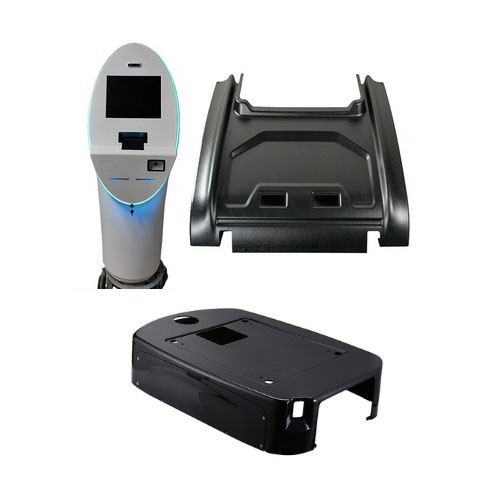
custom vacuum-formed machine enclosures for heavy parts
custom vacuum-formed machine enclosures are manufactured from thermoplastic sheets using vacuum forming or thermoforming processes and are specifically designed for equipment protection, structural enclosure, and aesthetic integration.
Description
By customizing vacuum-formed molds and forming parameters, highly conforming precision enclosures can be achieved that closely match equipment contours while balancing strength, heat dissipation, assembly, and appearance requirements. They are suitable for industrial equipment, instrumentation, automation equipment, and production line cabinets.
Applicable materials and specifications
- Common materials: engineering plastics or high-strength thermoplastic sheets such as ABS, HIPS, PET, PVC, PC, PP, etc.; select materials according to impact resistance, flame retardancy, temperature resistance, or electrical insulation requirements.
- Sheet thickness: common thickness ranges from 0.8mm to 6mm or thicker and can be customized according to strength, rigidity, and forming requirements.
- Surface treatments: supports glossy, matte, textured finishes, painting, screen printing, and film lamination to meet protection and brand identification needs.
- Functional formulations: optional material properties such as flame retardancy, antistatic, and UV resistance to meet safety and operating environment requirements.
Key forming process points for vacuum-formed machine enclosures
- Heating and softening: set uniform heating profiles according to material type and thickness to ensure even plasticization and accurate detail reproduction.
- Vacuum forming and pressure forming: use vacuum suction or a combined vacuum-pressure process to improve forming accuracy and avoid film thinning or wrinkling.
- Mold design: aluminum or steel molds should be designed with cooling channels, locating pins, and venting slots according to the complexity of the enclosure structure to ensure forming consistency and detail reproduction.
- Trimming and secondary processing: perform CNC trimming, punching, tapping, hot bending, or hot folding after forming to meet assembly interfaces and connection requirements.
- Assembly fit: reserve screw holes, snap features, guides, and wiring ducts to facilitate integration with metal bases, electronic components, or other parts.
Structure and design recommendations
- Wall thickness and ribs: distribute wall thickness reasonably and add stiffening ribs or reinforcements to improve rigidity and vibration resistance, avoiding stress concentration and deformation.
- Heat dissipation and ventilation: design vents, heat dissipation grilles, or mounting positions for heatsinks for equipment with heat-generating components to ensure stable operation.
- Openings and interface layout: optimize doors, inspection windows, interface cutouts, and sealing locations according to ergonomic and wiring requirements, balancing protection and maintainability.
- Modular design: divide the enclosure into segments or modules to facilitate maintenance, replacement, and standardized production.
- Surface and identification: consider the positioning and fixing of nameplates, badges, buttons, and display windows to facilitate brand identification and operation guidance.
Advantages and features
- Low-cost tooling and rapid prototyping: compared with injection-molded parts, vacuum-formed molds require lower investment and have shorter lead times for samples and small batches, suitable for quick validation and iteration.
- High customization: easy to personalize according to equipment shape, color, and functional requirements.
- Lightweight and machinability: materials are lightweight and easy to machine (cutting, drilling, bonding), facilitating on-site assembly and maintenance.
- Good surface finish: can achieve smooth or textured surfaces to meet both durability and aesthetic requirements.
- Compatibility with other materials: can be integrated with metal frames, seals, and heat-dissipation components for hybrid assemblies to meet complex functional needs.
Typical application scenarios for vacuum-formed machine enclosures
- Industrial automation equipment: control box enclosures, panel covers, sensor housings, etc.
- Instrumentation and testing equipment: portable instrument housings, test equipment panels, and inspection windows.
- Medical devices: non-contact enclosures, equipment panels, and protective covers (select materials according to medical standards).
- Food and packaging machinery: machine body covers, guide rail covers, and guards.
- Consumer and commercial equipment: kiosks, display equipment, and self-service machine housings.