
 English
  Français
  Tiếng Việt
  Italiano
  Nederlands
  Türkçe
  Svenska
  Polski
  Română
  Latviešu
  한국어
한국어  Русский
  Español
  Deutsch
  Українська
  Português
  العربية
  Indonesian
  Čeština
  Suomi
Suomi  Eesti
Eesti  Български
  Dansk
Dansk  Lietuvių
  Bokmål
  Slovenčina
  Slovenščina
  Ελληνικά
  Magyar
  עברית
עברית 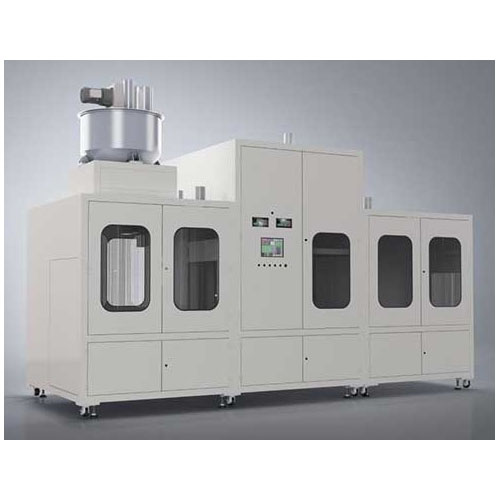
custom sheet metal enclosure for inspection equipment
Sheet metal enclosures for inspection equipment are used to provide structural support, mechanical protection, and electromagnetic shielding for various inspection, testing, and measurement devices.
The sheet metal enclosures for inspection equipment balance strength, thermal management, and ease of installation and maintenance. They can be customized with openings, mounting seats, and internal brackets according to the customer’s equipment shape and functional requirements, and are widely used in optical inspection, non-destructive testing, electronic test benches, laboratory equipment, and in-line production inspection systems.
Design and functional considerations for sheet metal enclosures for inspection equipment:
- Precise openings and mounting points: Reserve accurate cutouts, screw holes, and locating pin positions according to the equipment’s PCB, sensors, interfaces, displays, and connectors to ensure consistent assembly.
- Thermal management and ventilation: Plan ventilation holes, fan locations, natural convection channels, or water-cooling interfaces for power devices and heat-generating modules; support the installation of thermal pads and heatsinks when necessary.
- EMC and grounding: Use continuous welds, sealing gaskets, and conductive coatings, and reserve grounding terminals and shielding partitions to meet EMI/EMC requirements.
- Protection and sealing: Design sealing grooves, rubber seals, and drainage channels according to the operating environment level (IP rating) to ensure dustproof, waterproof, and contamination resistance.
- Maintenance and accessibility: Use removable side panels, quick-release panels, and modular layouts to facilitate on-site maintenance, troubleshooting, and upgrades.
- Vibration resistance and energy absorption: Design vibration-damping mounts, elastic pads, and stiffening ribs for inspection equipment that needs to be moved or used in vibrating environments to improve reliability and measurement stability.
Manufacturing processes and equipment:
- Cutting and holemaking: Laser cutting, plasma cutting, punching, and CNC milling are used for precise holemaking and contour cutting.
- Bending and forming: CNC press brakes (Press Brake) are used for box bending, flange forming, and mating edge treatment.
- Welding and assembly: Spot welding, MIG, TIG welding and joining methods such as bolts and rivets, combined with dedicated fixtures, achieve box strength and positioning accuracy.
- Surface treatment: Shot blasting, phosphating, powder coating, painting, electrophoresis, or anodizing (for aluminum) improve weather resistance and appearance consistency.
- Finishing: Milling holes, tapping threads, post-bend reshaping, and deburring ensure assembly fit and appearance quality.
Application scenarios:
Optical inspection benches, non-destructive testing (NDT) equipment, in-line inspection camera systems, instrument cabinets and electronic test benches, automated inspection fixtures, laboratory equipment, and related fields.