
 English
  Français
  Tiếng Việt
  Italiano
  Nederlands
  Türkçe
  Svenska
  Polski
  Română
  Latviešu
  한국어
한국어  Русский
  Español
  Deutsch
  Українська
  Português
  العربية
  Indonesian
  Čeština
  Suomi
Suomi  Eesti
Eesti  Български
  Dansk
Dansk  Lietuvių
  Bokmål
  Slovenčina
  Slovenščina
  Ελληνικά
  Magyar
  עברית
עברית 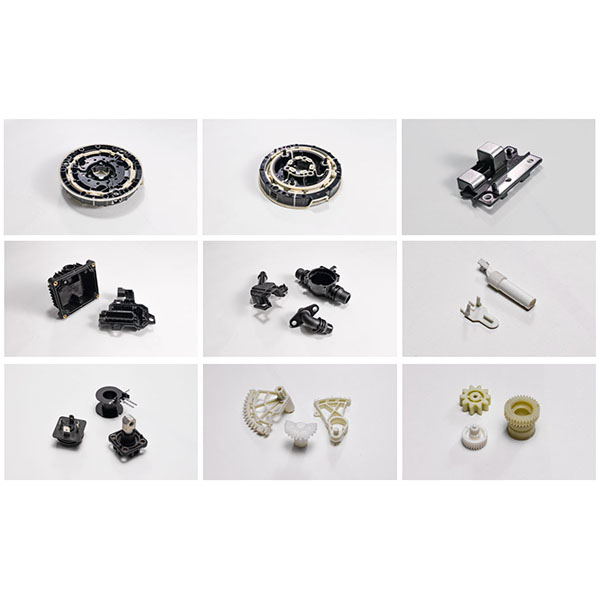
custom injection molds for automotive plastic parts
Custom injection molds for automotive plastic parts focus on providing high-precision mold design and manufacturing solutions for automotive interior and exterior trim, structural parts, and functional components.
Description
Custom injection molds are suitable for instrument panels, door trim panels, center consoles, bumper grilles, cooling fan blades, wiring harness clips, brackets, and a variety of engineering plastic parts. We focus on dimensional consistency, reliability, surface quality, and production stability, covering full delivery capability from sample validation to large-volume production.
Applicable part types:
- Appearance parts: instrument panel trims, door trim panels, center armrests, decorative covers, and grilles.
- Structural parts: brackets, fasteners, frames, and mounting bases.
- Functional parts: fan blades, flow guides, ventilation ducts, and intake assemblies.
- Connectors and clips: wiring harness clips, fasteners, guide posts, and riveted components.
- Precision parts: sensor mounts, guide bushings, gears, and sliders.
Common materials and characteristics:
- PP, PP, GF: lightweight, chemical-resistant, low-cost, suitable for appearance and structural parts.
- ABS, PC, PC+ABS: easy to finish, high impact resistance, commonly used for interior and appearance parts.
- PA (nylon): wear-resistant, temperature-resistant, high strength, suitable for load-bearing and moving parts.
- POM, PBT: low friction, dimensionally stable, commonly used for precision functional parts.
- TPE, TPU: used for overmolding processes for soft-touch coverings or sealing parts.
- Material modification: glass-filling, flame retardant, UV resistance, antibacterial, etc., formulated per customer requirements.
Mold design key points:
- Cavities and parting lines: Reasonably design parting lines and cavity structures to balance invisible appearance and easy demolding, ensuring dimensional accuracy of assembly mating surfaces.
- Cooling system: Use balanced multi-circuit cooling and optimize cooling for regions with thickness variation to reduce warpage and shorten cycles.
- Gating and hot-runner systems: Choose gate types and hot-runner systems based on part geometry and production volume to reduce sprue waste and secondary operations.
- Ribs and structural arrangement: Arrange ribs, fillets, and thickened areas reasonably to increase strength while avoiding stress concentration.
- Inserts and allowances for assembly: Reserve insert locating holes, boss positions, and tolerance compensation in mold design to facilitate in-mold integration or post-assembly.
- Surface texture and coating adaptation: Support polishing, texturing, silkscreen positions, plating, and painting by reserving corresponding process allowances.
Machining and injection molding process flow:
- Design review: Conduct manufacturability (DFM) assessment based on part drawings, materials, mechanical requirements, and cost targets.
- Mold flow analysis: Use Moldflow and other simulation tools to optimize gating, cooling, and packing strategies, reducing the number of mold trials.
- Precision machining: CNC machining, EDM, wire EDM, surface treatment, and insert machining to ensure mold fit and longevity.
- Mold trials and process validation: Validate filling, warpage, dimensions, and surface during trial molding, adjust process parameters, and produce first-article reports.
- Mass production: Establish stable process parameters, online inspection, and SPC data recording to ensure consistency between batches.