
 English
  Français
  Tiếng Việt
  Italiano
  Nederlands
  Türkçe
  Svenska
  Polski
  Română
  Latviešu
  한국어
한국어  Русский
  Español
  Deutsch
  Українська
  Português
  العربية
  Indonesian
  Čeština
  Suomi
Suomi  Eesti
Eesti  Български
  Dansk
Dansk  Lietuvių
  Bokmål
  Slovenčina
  Slovenščina
  Ελληνικά
  Magyar
  עברית
עברית 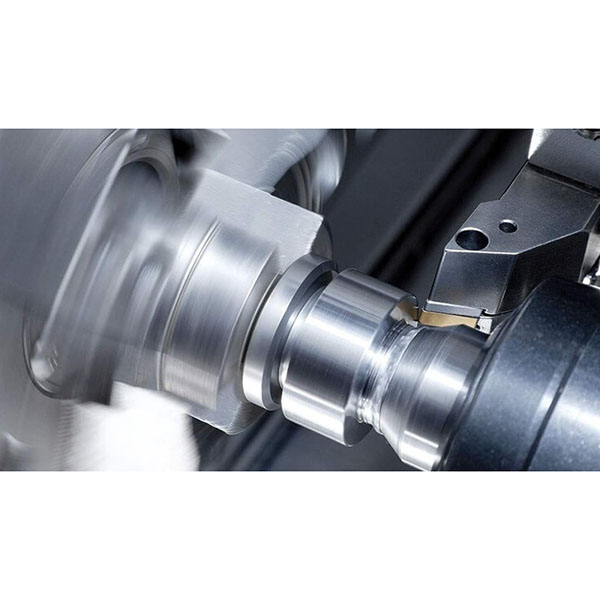
computer numerical control CNC turning for custom parts
computer numerical control CNC turning is a precision manufacturing process that uses CNC lathes as the primary equipment, cutting a rotating workpiece with tools. CNC turning is suitable for efficient machining of shaft-type parts, sleeves, threaded parts, faces, steps, chamfers and complex rotational geometries.
Description
computer numerical control CNC turning offers high repeatability and excellent surface quality, and is widely used in automotive, aerospace, medical devices, valves, hydraulic components, transmission parts, electronics and mechanical equipment industries.
Main process flow:
- Receive drawings and 3D models and confirm material and tolerance requirements.
- Process review: evaluate material properties, fix turing, tooling selection, cutting parameters and tolerance feasibility.
- CAM programming or lathe program creation (G‑code), including toolpaths, spindle speeds, feeds and tool compensation settings.
- Post‑processing and simulation verification to check for collisions or over‑cut risks.
- Machine setup and tool setting, perform first‑part trial machining and adjust programs or fixtures based on measurement results.
- Batch production and process monitoring, performing online measurement and compensation when necessary.
- Deburring, surface treatment, heat treatment (if required) and final inspection with issuance of inspection reports.
Equipment and capabilities:
- Machine types: CNC lathes, slant‑bed lathes, compound turn‑mill centers with turret tools, multi‑channel/multi‑spindle lathes, CNC turret lathes and CNC multi‑function turning centers.
- Machining diameter and length range: depending on machine specifications, supports diameters and lengths from a few millimeters to hundreds of millimeters.
- Spindle speed: commonly from hundreds to several thousand rpm; high‑speed lathes can reach tens of thousands rpm.
- Tooling: turning tools, form tools, climb/conventional milling heads, boring bars, form cutters, turret tool changers; inserts/materials include carbide, ceramic, CBN, etc.
- Automation: supports automatic loading, tool measurement, online compensation and robot loading.
Materials that can be machined:
- Non‑ferrous metals: aluminum alloys, copper, brass, bronze, etc.
- Steels: carbon steel, alloy steel, tool steel (including some hardened materials, subject to evaluation).
- Stainless steels: 304, 316, etc. (require more conservative cutting parameters and adequate cooling).
- Titanium and high‑temperature alloys: require specialized tooling and cutting strategies.
- Engineering plastics: POM, PEEK, Delrin, etc.
- Others: composite rotational parts, brass alloys and specialty alloys (evaluated per process).
Process types and toolpath strategies:
- Rough turning: large material removal and higher feeds to remove stock and improve efficiency.
- Semi‑finish turning: control stock allowance to reduce distortion and prepare for finishing.
- Finish turning: low depth of cut and high‑precision toolpaths to ensure dimensional accuracy and surface quality.
- Threading: turning threads by cutting or rolling, for external and internal threads.
- Boring and internal machining: deep hole drilling, boring and precision reaming/grinding (combined with suitable tooling or processes as needed).
- Compound turn‑mill: integrated turning and milling to achieve complex profiles and face features in one setup.
Quality control and inspection of computer numerical control CNC turning:
- First‑part inspection and program simulation to prevent collisions or dimensional deviations.
- Use CMM, outside micrometers, inside gauges, roundness testers, surface roughness testers, etc., for online or offline inspection.
- Inspection reports available at shipment, including CMM measurement reports, material certificates, hardness reports and sample inspection records.
Optional surface treatments and post‑processing:
- Heat treatment: quenching, tempering, aging, etc. (per material and fit requirements).
- Surface treatments: polishing, bead blasting, anodizing, nickel plating, chrome plating, black oxide, coatings or painting.
- Deburring, assembly, balancing, dynamic/static functional testing and packing services.
Ordering and delivery:
- Quotation requirements: 2D drawings or STEP/IGES files, specifying material, quantity, critical tolerances, surface treatments and delivery time.
- Quotation process: upload drawings → technical review → quote and lead‑time confirmation → first‑part approval → batch production → delivery with inspection reports.
- We support single prototypes, small batch trials and mass production; lead times depend on quantity and complexity.
Common notes:
- Please clearly indicate datums, critical dimensions and tolerances, surface roughness and assembly fit types (interference or clearance) on drawings.
- For thin‑walled, high aspect‑ratio or hollow shaft parts, indicate fixture support and cooling requirements, or commission us to provide a fixturing solution.
- If the material to be machined is quenched or of high hardness, please inform us in advance of the heat treatment history and Brinell/Rockwell/Vickers hardness values.
Why choose our computer numerical control CNC turning services:
- Experienced CAM and tooling engineers, specializing in shaft parts and complex rotational geometries.
- Complete machine and tooling inventory to quickly respond to prototypes and small‑to‑medium production runs.
- Strict quality system with traceable inspection reports (CMM, etc.) to ensure delivery quality.
- One‑stop value‑added services: heat treatment, surface finishing, assembly and custom packaging.