
 English
  Français
  Tiếng Việt
  Italiano
  Nederlands
  Türkçe
  Svenska
  Polski
  Română
  Latviešu
  한국어
한국어  Русский
  Español
  Deutsch
  Українська
  Português
  العربية
  Indonesian
  Čeština
  Suomi
Suomi  Eesti
Eesti  Български
  Dansk
Dansk  Lietuvių
  Bokmål
  Slovenčina
  Slovenščina
  Ελληνικά
  Magyar
  עברית
עברית 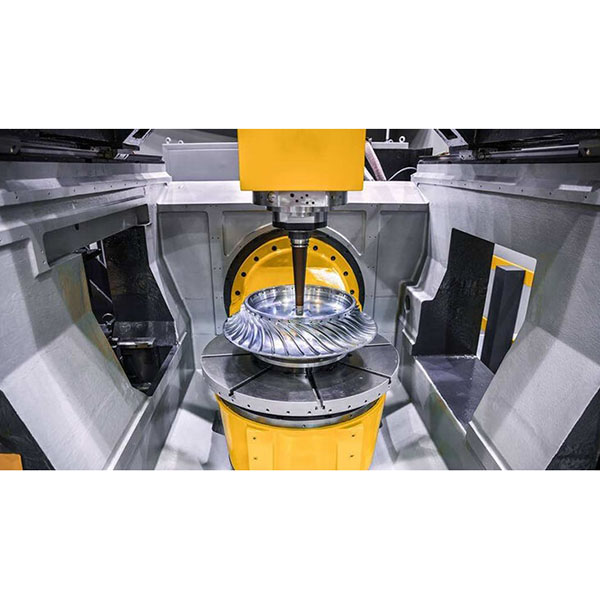
computer numerical control CNC milling for precision parts
CNC milling is a precision manufacturing process that uses a numerical control system to drive milling cutters according to preprogrammed instructions (G‑code and toolpaths). It is suitable for machining complex contours, precision steps, planes, slots, holes and three‑dimensional surfaces.
Description
CNC milling offers high repeatability and automation and is widely used in mold making, aerospace, automotive, medical devices, electronic enclosures, precision equipment and other industries.
Main process flow of CNC milling:
- Receive drawings and 3D models.
- Process review: evaluate material, fixturing, tooling and tolerances.
- CAM programming and toolpath generation: roughing, semi‑finishing, finishing, chamfering and trimming.
- Post‑processing to generate machine‑specific G‑code and perform simulation verification.
- Machine setup: workholding, tool setting, first‑part trial machining and adjustments.
- Batch production and in‑process inspection.
- Deburring, surface treatment and final inspection.
Materials that can be machined:
- Non‑ferrous metals: aluminum alloys, copper, brass, bronze.
- Steels: carbon steel, alloy steel and tool steel, including hardened materials (subject to evaluation).
- Stainless steels: 304, 316, etc., which require more conservative cutting parameters and cooling.
- Titanium alloys and high‑temperature alloys, requiring specialized tooling and cutting strategies.
- Engineering plastics: POM, PEEK, ABS, PMMA (acrylic).
- Composites: carbon fiber reinforced composites, requiring dust control and specialized tooling.
Process types and toolpath strategies:
- Roughing, high feed and large material removal to remove most stock and improve efficiency.
- Semi‑finishing, leave stock allowance to reduce distortion.
- Finishing, low depth of cut and high‑precision toolpaths to ensure dimensional accuracy and surface quality.
- High‑efficiency cutting, trochoidal toolpaths suitable for deep slots and to extend tool life.
- 5‑axis simultaneous machining, for complex surfaces and one‑setup machining.
Quality control and inspection of CNC milling:
- First‑part inspection and toolpath simulation to avoid collisions and errors.
- Online measurement or sampling inspection using CMM, profilometer, surface roughness tester, etc.
- We can provide inspection reports at shipment, such as CMM measurement reports, material certificates and hardness reports.
Optional surface treatments and post‑processing:
- Heat treatment: quenching, tempering, aging. Surface finishes: anodizing and anodized coloring, bead blasting, polishing, electroplating (nickel, chrome), black oxide, painting/coating, laser marking, etc.
- Deburring, assembly and functional testing.
Common notes:
- Please clearly indicate datums, critical tolerances and surface roughness requirements on drawings. For assembly fits, specify interference or clearance fits.
- For thin‑walled or high aspect‑ratio parts, indicate fixture and support requirements or commission us to provide a fixturing solution.
- If the material to be machined is quenched or of high hardness, please inform us in advance of the heat‑treatment history and hardness values.
Why choose our CNC milling services:
- Professional CAM programming and multi‑axis machining experience, supporting complex surfaces and mold cavity machining.
- Rigorous quality control system, providing traceable inspection reports.
- A variety of machine types and tooling libraries to rapidly respond to prototypes and small batches.
- One‑stop value‑added services: heat treatment, surface finishing, assembly and packaging.