
 English
  Français
  Tiếng Việt
  Italiano
  Nederlands
  Türkçe
  Svenska
  Polski
  Română
  Latviešu
  한국어
한국어  Русский
  Español
  Deutsch
  Українська
  Português
  العربية
  Indonesian
  Čeština
  Suomi
Suomi  Eesti
Eesti  Български
  Dansk
Dansk  Lietuvių
  Bokmål
  Slovenčina
  Slovenščina
  Ελληνικά
  Magyar
  עברית
עברית 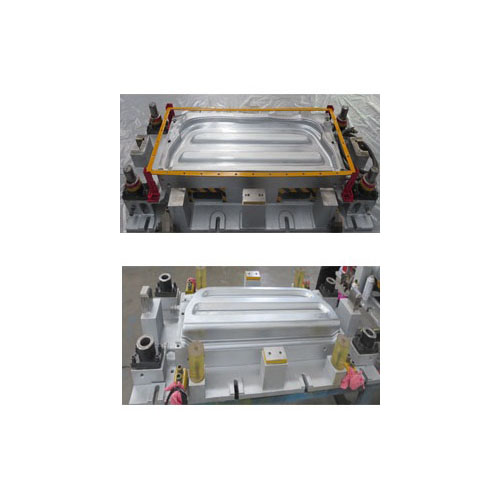
coat rack forming and blanking die with quick lead times
The coat rack forming and blanking die is a dedicated stamping die designed for coat rack parts; it integrates blanking and forming processes and can efficiently and stably produce assembly-compliant coat rack parts on presses or automated production lines.
Description
The coat rack forming and blanking die is suitable for mass production and is widely used in the furniture, home accessories, and interior hardware manufacturing sectors.
Main features of the coat rack forming and blanking die:
- Integrated operations: Combine blanking and forming within a single die or multi-station process to reduce process transfers and secondary locating errors.
- High efficiency and stability: Employ rational strip layout and station allocation, supporting progressive or transfer die structures to increase production rate and ensure dimensional consistency.
- High forming accuracy: Precise cavities and reliable locating and feeding systems control critical dimensions and assembly references, reducing assembly rework.
- Strong process adaptability: Capable of bending, flanging, stretching, trimming, punching and other forming and machining requirements, and can integrate spot-welding or riveting stations as needed.
- Easy maintenance and durability: Use high-strength die steels and advanced heat treatment processes; critical components receive surface treatments to improve wear resistance and anti-adhesion properties, extending service life.
Design and manufacturing key points:
- Strip layout and takt planning: Develop strip layout and station allocation based on the coat rack part geometry, material, and production targets to optimize material utilization and ensure processing takt.
- Cavity and tolerance design: Properly set locating datums, clearances, and assembly allowances, considering elastic springback and material deformation characteristics to ensure first-part conformity and stable mass production.
- Guiding and locating mechanisms: Use precision guide pillars, bushings, and locating pins to ensure repeatable positioning accuracy during high-speed stamping, reducing die collisions and abnormal wear.
- Cooling and lubrication considerations: Design cooling or lubrication channels in areas where heat and friction need to be controlled to improve forming quality and extend die life.
- Tryout and optimization: After die manufacture, conduct tryout validation, record critical dimensions, appearance defects, and material deformation, and adjust the die or process parameters based on tryout results.
Materials and applicable part types:
- Applicable materials: Commonly cold-rolled steel, galvanized sheet, stainless steel, low-alloy steel, or light alloys; material grades and thickness should be selected based on part strength and formability assessments.
- Thickness range: Typical processing thickness generally ranges from 0.3 mm to 4.0 mm (depending on part design and material); special thick or ultra-thin parts require engineering evaluation for feasibility.
- Typical parts: Coat rack bodies, hooks, brackets, connectors, and decorative covers—components primarily formed and blanked.
Maintenance and after-sales support:
- Regular maintenance: It is recommended to establish a die maintenance program including cleaning, lubrication, inspection of critical dimensions, and replacement of wear parts; preventive maintenance can reduce the risk of unexpected downtime.
- Rapid fault response: Provide a spare parts list for wear items and fast repair support to shorten downtime for repairs.
- Operation and maintenance documentation: Provide die drawings, tryout reports, first-piece records, and maintenance manuals upon delivery to facilitate on-site use and upkeep.