
 English
  Français
  Tiếng Việt
  Italiano
  Nederlands
  Türkçe
  Svenska
  Polski
  Română
  Latviešu
  한국어
한국어  Русский
  Español
  Deutsch
  Українська
  Português
  العربية
  Indonesian
  Čeština
  Suomi
Suomi  Eesti
Eesti  Български
  Dansk
Dansk  Lietuvių
  Bokmål
  Slovenčina
  Slovenščina
  Ελληνικά
  Magyar
  עברית
עברית 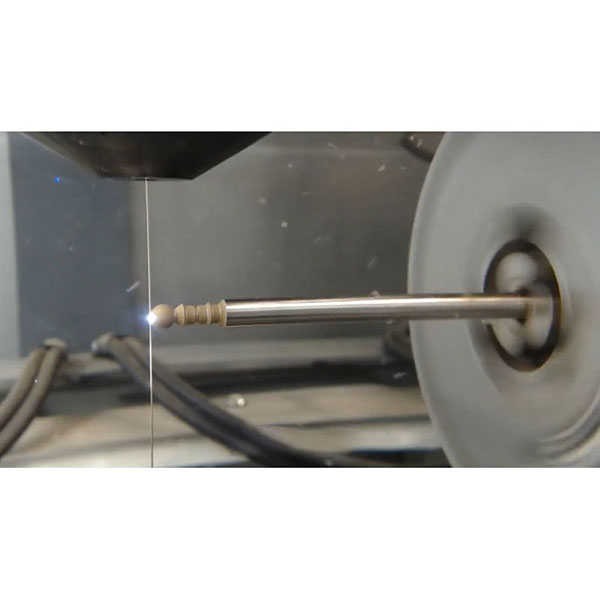
CNC wire EDM precision cutting for tight tolerances
CNC wire EDM is an electrical discharge machining process that uses a continuously moving fine metal wire (commonly brass, molybdenum, or coated wire) as the electrode to remove material from the workpiece via pulsed discharges.
Description
CNC wire EDM is controlled entirely by numerical programs, enabling complex contours, high precision, and narrow-kerf cutting. It is especially suitable for hard materials such as hardened steel, cemented carbide, titanium alloys, and nickel-based alloys. Compared with laser, waterjet, or mechanical cutting, wire EDM produces a small heat-affected zone, low stress, and minimal distortion, making it well suited for precision molds and high-accuracy parts.
Applicable materials and workpiece types for CNC wire EDM
- Materials: tool steels (e.g., SKD11, H13, S136), hardened steels, cemented carbide (tungsten carbide), stainless steel, titanium alloys, nickel-based alloys, copper alloys, conductive ceramics, etc.
- Workpieces: punching die cutting edges and inserts, cavity split components, precision jig/fixture parts, complex planar contour parts, thin-walled and micro-feature parts, precision holes and narrow-kerf parts.
Equipment, wire, and dielectric for CNC wire EDM:
- Machine types: slow wire EDM (high precision, superior surface quality, suited for molds and precision parts); fast wire EDM (higher efficiency, lower cost, suited for general-accuracy parts).
- Wire: brass wire, coated brass wire, molybdenum wire. Selection depends on cutting speed, accuracy, surface requirements, and cost.
- Dielectric (working fluid): primarily deionized water (DI water), requiring stable conductivity and cleanliness. Used with filtration systems to keep the gap clean and ensure smooth debris evacuation.
- Supply and flushing: directed flushing from upper/lower nozzles to promptly remove erosion products and reduce short circuits and wire marks.
Process parameters and reference workflow for CNC wire EDM:
- Process review: confirm material, hardness, contour accuracy, surface roughness targets, sharp-corner/narrow-kerf requirements, and lead time.
- Programming and path planning: set primary cut plus second/third skim cuts based on contour and allowance; optimize entry/exit and start-hole locations to avoid stress concentration and witness marks.
- Fixturing and alignment: ensure workpiece flatness and stable datums. Set wire tension and guide roller condition to control wire vibration and drift.
- Initial cutting (rough cut): higher discharge energy and feed to quickly form the contour; leave a small allowance for skim cuts.
- Skim cutting (finish cuts): reduce discharge energy and improve stability to eliminate rough-cut texture and errors, enhancing dimensions and surface quality.
- Cleaning and deburring (wire EDM generally produces no traditional burrs, but erosion products must be cleaned): clean machined surfaces and cavities; perform light polishing or rust prevention if needed.
- Inspection and records: inspect dimensions, form, and surface roughness; record parameters and batch data for traceability and batch-to-batch consistency control.
Key technical points for CNC wire EDM:
- Discharge stability: control pulse parameters (peak current, pulse width, gap voltage) and flushing pressure to reduce short circuits and wire breaks.
- Wire tension and guidance: appropriate tension and good guide roller condition to avoid wire vibration and corner overcut; reduce speed and optimize compensation at sharp corners.
- Gap control: maintain a stable machining gap and clean dielectric to promptly remove erosion debris and prevent carbon deposits and wire marks.
- Second and third skim-cut strategies: select different energies and speeds according to target roughness and accuracy; common skim passes significantly reduce Ra and profile error.
- Thermal and material effects: use low-energy finish passes for cemented carbides and very hard materials to reduce microcrack risk; ensure proper fixturing and energy control for thin-walled parts.
Common application scenarios:
- Moldmaking: punching die edges, punch/die segmentation, precision contours of cavity inserts.
- Precision mechanics and electronics: complex 2D contours, micro-narrow slots, conductive microstructures.
- Aerospace and medical: complex contours and narrow-kerf parts in hard materials.
- Jigs and fixtures: locating components, clamping assemblies, precision plate cutting.
Comparison of CNC wire EDM with other cutting processes:
- Laser cutting: efficient and fast, but control of heat effects and burrs on high-precision sharp corners/narrow kerfs is inferior to wire EDM; wire EDM is better for hard materials and precision contours.
- Waterjet cutting: broad material adaptability and no thermal effects, but not as capable as wire EDM for micro-features and ultra-high-precision contours; surface quality and tiny features are limited by jet diameter.
- Mechanical milling/sawing: high removal rates and suitable for roughing and structural parts, but difficult to achieve the narrow kerfs and high-precision sharp corners typical of wire EDM.