
 English
  Français
  Tiếng Việt
  Italiano
  Nederlands
  Türkçe
  Svenska
  Polski
  Română
  Latviešu
  한국어
한국어  Русский
  Español
  Deutsch
  Українська
  Português
  العربية
  Indonesian
  Čeština
  Suomi
Suomi  Eesti
Eesti  Български
  Dansk
Dansk  Lietuvių
  Bokmål
  Slovenčina
  Slovenščina
  Ελληνικά
  Magyar
  עברית
עברית 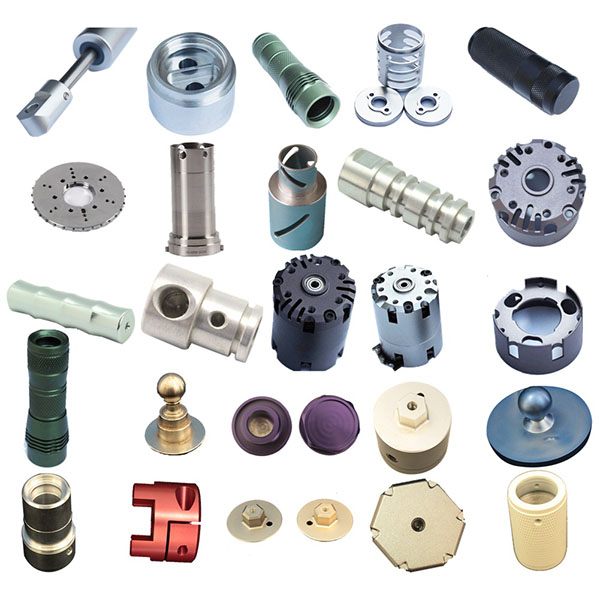
CNC turning services for precision metal components
We provide professional CNC turning services, specializing in high‑precision manufacturing of shafts, bushings and various rotational parts. Combining advanced CNC lathes with extensive process experience, we consistently deliver components with high dimensional accuracy, good concentricity, and excellent surface quality.
Description
CNC turning is widely used in industries such as automotive, aerospace, medical devices, electronic connectors, hydraulic and pneumatic systems, and precision hardware.
Machining capabilities and equipment:
- 1. Equipment types: CNC lathes, turn‑mill machining centers with live tooling, multi‑tasking lathes (with Y‑axis and sub‑spindle), Swiss‑type sliding headstock machines, rotary transfer machines, and similar equipment.
- 2. Machining operations: external and face turning, internal hole boring, drilling and tapping, grooving, threading, chamfering, end‑face and side milling, and other combined machining processes.
- 3. Production capacity and automation: support single prototype pieces, small to medium batch production; equipped with automatic bar loading/unloading, palletization and automated production line capabilities to improve throughput and consistency.
Materials supported of CNC turning:
- 1. Common materials: aluminum alloys (6061, 6063, 7075), stainless steels (304, 316, 17‑4PH), carbon steel, brass, copper, titanium alloys, etc.
- 2. Special materials: process plans can be developed on demand; difficult‑to‑machine alloys and engineering plastics can also be handled (drawings or samples required for confirmation).
Surface finishing and secondary processes:
- 1. Available processes: polishing/mirror finishing, sandblasting, anodizing, phosphating, nickel/zinc plating, heat treatment, laser marking, coatings, assembly and functional testing, etc.
- 2. Process recommendations: we recommend combinations of surface treatments based on material and functional requirements, balancing corrosion resistance, appearance, and thermal/contact surface performance.
Quality control and inspection of CNC turning:
- 1. QC process: drawing review, first article inspection (FAI), in‑process inspections, finished product inspection and pre‑shipment inspection to ensure each batch is stable and traceable.
- 2. Inspection equipment: coordinate measuring machines (CMM), surface roughness testers, optical projectors, hardness testers, bore gauges and various specialized measuring tools.
- 3. Report support: FAI reports, complete inspection reports and material test reports (MTR) can be provided to meet customer traceability requirements.