
 English
  Français
  Tiếng Việt
  Italiano
  Nederlands
  Türkçe
  Svenska
  Polski
  Română
  Latviešu
  한국어
한국어  Русский
  Español
  Deutsch
  Українська
  Português
  العربية
  Indonesian
  Čeština
  Suomi
Suomi  Eesti
Eesti  Български
  Dansk
Dansk  Lietuvių
  Bokmål
  Slovenčina
  Slovenščina
  Ελληνικά
  Magyar
  עברית
עברית 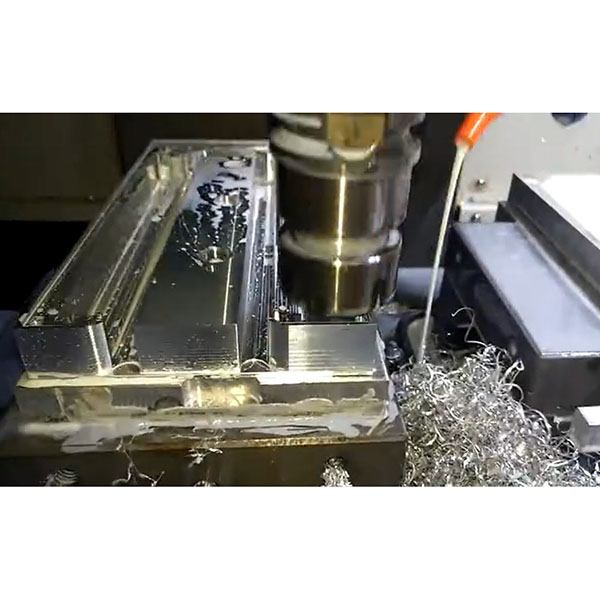
CNC slotting for precision machining and productivity
CNC slotting is a precision machining process dominated by axial reciprocating cutting, specifically intended for producing deep narrow slots, keyways, internal recesses and other specialized internal features.
Description
We employ a process workflow that combines CNC slotting heads with machining centers to deliver high-repeatability, high-precision capabilities for both batch and single‑piece production, suitable for a wide range of industry needs including molds, automotive parts, hydraulic components, shafts and power transmission parts.
Process principle and characteristics of CNC slotting:
- The workpiece is fed axially in a reciprocating motion by a dedicated slotting cutter or slotting head; after each down‑cut the tool retracts to clear chips, and the slot profile is formed layer by layer.
- Cutters are typically single‑point or multi‑tooth slotting tools; cutting forces are concentrated and chip breakage is stable, making the method well suited for features with high depth‑to‑width ratios or narrow cavities.
- Both form slotting (one‑pass formation of the complete slot profile) and layered slotting (stepwise depth cutting combined with lateral milling) can be realized.
Advantages of CNC slotting:
- More stable and less prone to vibration than conventional milling when machining deep narrow slots and high depth‑to‑width features.
- Good control over slot width, slot depth, slot bottom flatness and perpendicularity.
- Capable of machining high‑hardness materials and heat‑treated parts, with strong adaptability.
- Controllable tool wear and high processing repeatability, suitable for small to medium batch and mass production.
Applicable materials and size capabilities for CNC slotting:
- Supported materials: steel (including hardened/quenched steel), cast iron, stainless steel, aluminum alloys, brass, copper alloys, titanium alloys and other common metals. Certain advanced ceramics or composite materials can be evaluated separately.
- Typical slot width range: 0.5 mm to 30 mm (expandable depending on tooling and equipment).
- Typical slot depth range: 0.5 mm to 200 mm (deep slotting requires special fixtures).
- Custom tooling and fixturing solutions can be provided to accommodate larger or smaller specifications per customer requirements.
Common application scenarios for CNC slotting:
- Transmission shafts and keyway machining (key slots, semicircular key seats).
- Precision forming of mold cavities, guide rails and locating slots.
- Machining internal cavities and narrow passages in pneumatic and hydraulic components.
- Special slot machining for aerospace, automotive and precision machinery components.