
 English
  Français
  Tiếng Việt
  Italiano
  Nederlands
  Türkçe
  Svenska
  Polski
  Română
  Latviešu
  한국어
한국어  Русский
  Español
  Deutsch
  Українська
  Português
  العربية
  Indonesian
  Čeština
  Suomi
Suomi  Eesti
Eesti  Български
  Dansk
Dansk  Lietuvių
  Bokmål
  Slovenčina
  Slovenščina
  Ελληνικά
  Magyar
  עברית
עברית 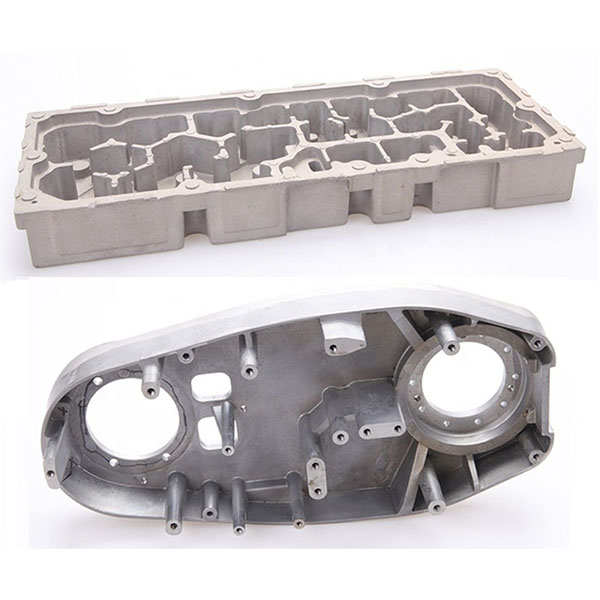
CNC machining of engine die-cast parts for precision
We provide precision CNC machining services for engine die‑cast components, aiming to machine die‑cast blanks into high‑precision parts that meet assembly and functional requirements.
Description
We significantly improve dimensional accuracy, surface finish, and assembly consistency through CNC milling, drilling, tapping, boring, and finishing processes, making our services suitable for post‑machining needs of engine cylinder blocks, cylinder head brackets, oil‑passage fittings, mounts, and various die‑cast structural components.
CNC machining capabilities and processes:
- Machining equipment: vertical, horizontal CNC machining centers, 5‑axis machining centers, CNC boring‑milling machines, CNC gantry machining centers, and dedicated drilling, tapping equipment; capable of multi‑face machining in a single setup and 5‑axis compound machining.
- Machining operations: profile milling, planar, face milling, end‑face and side drilling, deep hole boring, tapping, grooving, chamfering, thread forming, and precision finishing of critical contact surfaces.
- Key process points: datum design and process compensation are applied to address die‑casting blank warpage and hole position deviation; fixture locating and blank‑pull clamping strategies are used to ensure assembly datums and hole position accuracy.
Materials and blank sources for CNC machining:
- Common materials: die‑cast aluminum alloys such as ADC12 and A356, and some zinc alloy die‑castings.
- Blank requirements: we accept customer‑supplied blanks (original die‑castings) or offer die‑casting and subsequent machining services on behalf of customers; we provide process evaluation for blank warpage, shrinkage areas, etc., and recommend reinforcement or rework solutions when necessary.
Dimensional tolerances and surface quality:
- Dimensional tolerances: standard hole locations and mating surfaces can be machined to ±0.05 mm; critical mating surfaces and hole locations can be processed to ±0.01–±0.02 mm per drawing requirements (depending on part geometry and batch stability).
- Surface roughness: precision machining can achieve Ra ≤ 0.8 µm (or optimized to higher standards per customer requirements); critical sealing and mating surfaces can be ground or polished to ensure sealing and fit performance.
Surface treatments and secondary operations:
- Typical post‑process options: deburring, sandblasting, polishing, anodizing (for aluminum alloys), phosphating, painting, powder coating, electrophoretic coating, local hardening or heat treatment, etc. (selected according to material and functional requirements).
- Assembly and testing: we can provide bolt pre‑assembly, assembly line testing, air, water tightness testing, and functional verification to deliver ready‑to‑install parts or subassemblies.
Quality control and inspection:
- QC process: incoming material and drawing review, first article inspection (FAI), in‑process inspections, final inspection and pre‑shipment inspection to ensure batch consistency and traceability.
- Inspection equipment: coordinate measuring machines (CMM), surface roughness testers, hardness testers, optical projectors, bore gauges, and various specialized measuring tools; support for key dimension inspection records and inspection report generation.
- Documentation support: FAI reports, inspection reports, material test reports (MTR), and executed inspection records can be provided as required.