
 English
  Français
  Tiếng Việt
  Italiano
  Nederlands
  Türkçe
  Svenska
  Polski
  Română
  Latviešu
  한국어
한국어  Русский
  Español
  Deutsch
  Українська
  Português
  العربية
  Indonesian
  Čeština
  Suomi
Suomi  Eesti
Eesti  Български
  Dansk
Dansk  Lietuvių
  Bokmål
  Slovenčina
  Slovenščina
  Ελληνικά
  Magyar
  עברית
עברית 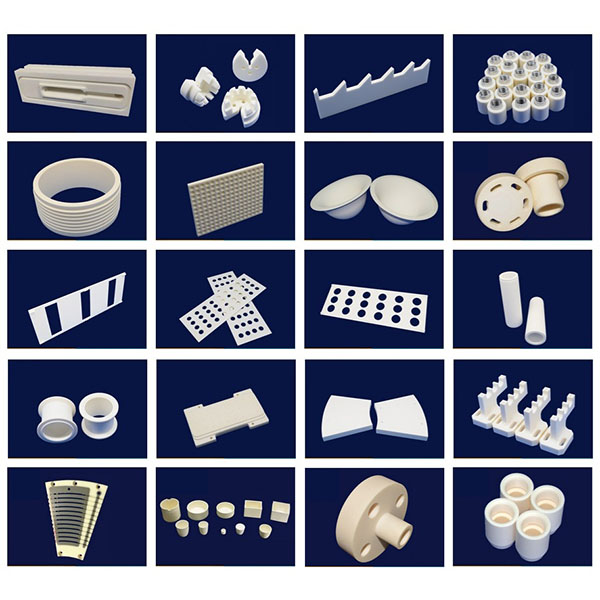
CNC machining of alumina ceramics for demanding use cases
We provide professional CNC machining services for alumina (Al2O3) ceramic parts. In response to alumina’s high hardness, good wear resistance and relative brittleness, we develop dedicated machining processes, tooling strategies and fixture designs to achieve stable dimensional accuracy, good concentricity and excellent surface quality.
Description
CNC machined alumina ceramic products are widely used in fields such as electrical insulation, sealing components, wear‑resistant liners, sensor supports, valve seats, and high‑temperature structural parts.
Main advantages of CNC machining alumina ceramics:
- Extensive experience machining alumina, with familiarity of material fracture and chip evacuation characteristics, reducing processing defect rates.
- Precise dimensional and geometric control, supporting micron‑level or higher accuracy requirements (depending on geometry and material).
- Diamond tooling and ultra‑fine grinding/polishing processes to ensure low roughness and good geometric form of inner bores and mating surfaces.
- Professional fixturing, temperature control and vibration‑control solutions to reduce machining stress and the risk of deformation in thin‑walled parts.
- Complete quality management and functional testing systems to support prototype validation and consistent batch delivery.
Equipment and tooling:
- Machines: High‑rigidity CNC lathes, three‑axis and five‑axis machining centers, internal/external cylindrical grinders, turn‑grind compound machines, and ultra‑precision spindles to accommodate multi‑operation machining of outer profiles, inner bores, end faces and complex cavities.
- Tools and consumables: Diamond turning tools, diamond end mills, diamond grinding wheels, PCD tools and ultra‑hard coated tools, paired with ultra‑fine abrasives and polishing consumables; tool geometries and cutting/grinding parameters are optimized for different grades of alumina.
- Auxiliary systems: Temperature control and thermostatic fixtures, vibration suppression devices, ultra‑high‑pressure cooling with particulate filtration, online measurement and automated loading/unloading systems to improve machining stability and batch consistency.
Main machining methods for CNC machining of alumina ceramics:
- Precision turning and boring: Establish outer and inner datums, perform roughing and semi‑finish operations, and control concentricity and axial dimensions.
- Diamond grinding and honing: Use roughing, finishing and honing passes to achieve strict inner‑bore tolerances and low surface roughness, suitable for bearing fits and sealing interfaces.
- Ultrasonic vibration assisted machining (USM): Apply ultrasonic vibration in thin‑walled, slender or complex features to reduce cutting forces and suppress crack propagation.
- EDM and micro‑machining trimming: Precisely trim local geometries that are difficult to machine directly, such as complex internal cavities, blind holes and locating slots.
- Polishing and chemical mechanical polishing (CMP): Produce mirror‑grade surfaces on sealing faces and critical mating surfaces to reduce friction and minimize particle entrapment.
Cooling, chip evacuation, and fixturing design:
- Cooling strategies: Use controlled cooling and highly filtered lubricants, and when necessary combine with coolant circulation and temperature‑controlled fixtures to avoid local overheating, thermal stress or dimensional drift.
- Chip evacuation and cleaning: Optimize toolpaths and chip channels, and use ultrasonic and high‑pressure cleaning, vacuum chip removal and air blow‑off to prevent particles embedding in machined surfaces and affecting fit accuracy.
- Fixturing solutions: Custom mandrels, concentric supports and multi‑point support fixtures using elastic locating and stress‑dispersion designs to reduce clamping‑induced stress concentrations and prevent deformation of thin‑walled parts.
Machinable materials and typical applications:
- Materials: Various alumina ceramics (Al2O3 of different grades and modified systems), alumina‑based composite ceramics and coated alumina ceramics.
- Typical applications: Electrical and electronic insulation components, ceramic bushings and liners, sealing rings and valve seats, wear‑resistant liners, sensor support structures, pump and fluid control components, medical and optical parts, etc.
Design recommendations and manufacturing notes:
- Wall thickness and length‑to‑diameter ratio: Avoid excessively thin walls or overly large length‑to‑diameter ratios. Retain clamping areas or add stiffening ribs in the design when necessary to improve manufacturability and final part strength.
- Chamfers and fillets: Provide appropriate chamfers or fillets at hole entries, end faces and assembly edges to reduce stress concentration and facilitate tool passage and assembly.
- Machining allowance and tolerances: Clearly specify roughing and finishing allowances and assembly fit tolerances on drawings; reserve material on critical mating surfaces for final grinding and test fitting.
- Sintering and dimensional variation: Consider dimensional deviations and residual stresses after alumina sintering; when necessary, reserve machining allowance or apply compensation strategies in the process.
Machining accuracy and surface quality:
- Dimensional and geometric accuracy: Through staged machining, online measurement and correction, outer diameter, inner diameter, concentricity and end‑face parallelism can be strictly controlled to meet high‑precision fit requirements.
- Surface roughness: By combining grinding, honing and polishing processes, low Ra surfaces can be achieved on inner bores and mating faces to improve running smoothness and service life.
- Defect control: Minimize cracks, chipping and inclusions by optimizing process parameters, staged stress relief and necessary microscopic or non‑destructive inspections (e.g., optical microscopy, X/CT).