
 English
  Français
  Tiếng Việt
  Italiano
  Nederlands
  Türkçe
  Svenska
  Polski
  Română
  Latviešu
  한국어
한국어  Русский
  Español
  Deutsch
  Українська
  Português
  العربية
  Indonesian
  Čeština
  Suomi
Suomi  Eesti
Eesti  Български
  Dansk
Dansk  Lietuvių
  Bokmål
  Slovenčina
  Slovenščina
  Ελληνικά
  Magyar
  עברית
עברית 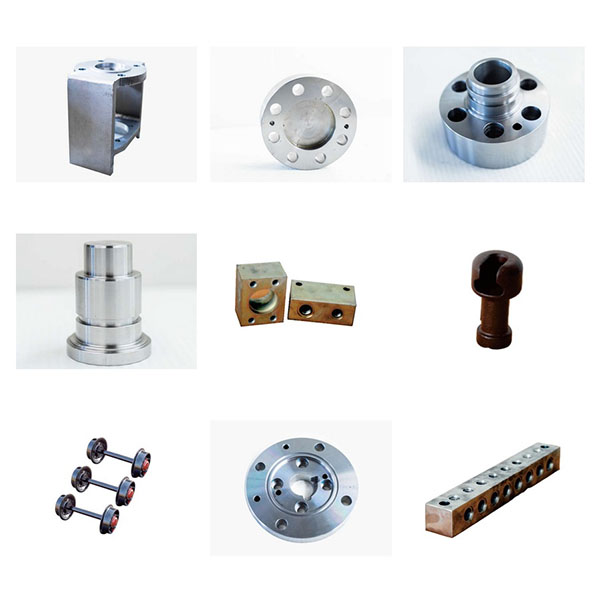
CNC machining for construction machinery spare parts
We specialize in precision CNC machining of construction machinery spare parts, providing durable and interchangeable machined components for excavators, loaders, bulldozers, pavers, and various earthmoving, lifting, and construction equipment.
Description
CNC machining ensures parts exhibit excellent dimensional stability, fit accuracy, and service life under heavy loads, impact, and abrasive conditions by using robust fixturing, heavy‑cut tooling, and mature process routes.
CNC machining capabilities and processes:
- Equipment: heavy‑duty vertical and horizontal CNC machining centers, CNC lathes, CNC boring‑milling machines, CNC gantry machining centers, horizontal milling machines, and 5‑axis machining centers; capable of clamping large workpieces and providing rigidity for heavy cutting.
- Processes: face and profile milling, turning, deep hole drilling, boring, tapping, keyway machining, thread machining, finish machining and grinding after heat treatment, etc.; able to complete multiple operations in a single setup to ensure alignment accuracy.
- Key points: for the heavy‑duty working conditions of construction machinery parts, priority is given to concentricity, axial straightness, hole positions and geometric accuracy of mating surfaces. Process compensation, segmented roughing/finishing, and tool life management are employed to improve yield.
Materials and blank forms for construction machinery parts:
- Common materials: cast iron (gray iron, ductile iron), carbon steel, alloy structural steel, carburizing steel, alloy cast steel, stainless steel, and high‑strength materials machinable after quenching and tempering.
- Blank sources: cast blanks, forgings, heat‑treated semi‑finished products, or customer‑supplied blanks; machining allowance evaluation and recommendations for appropriate blank shapes and heat‑treatment conditions can be provided to optimize cost and machining efficiency.
Surface treatments and strengthening processes:
- Common post‑processes: heat treatment (quenching, tempering, carburizing, nitriding), surface hardening, induction hardening, nitriding, shot peening, phosphating, sandblasting, painting, and powder coating, etc., to enhance wear resistance and fatigue performance.
- Surface protection: anti‑corrosion paint, electrophoretic coating, or special anti‑rust packaging can be selected based on the service environment to extend part service life in field conditions.
Assembly and functional testing:
- Assembly services: provide assembly, bearing pre‑installation, key and gear fit inspection, and other pre‑delivery assembly services to ensure parts are ready for use.
- Functional testing: perform dynamic balancing, bearing run‑in tests, sealing tests, and load simulation testing (customized per customer requirements).
Quality control and inspection equipment:
- QC process: incoming inspection, first article inspection (FAI), in‑process inspections, full inspection before shipment, and shipping inspection to ensure batch stability and traceability.
- Inspection equipment: coordinate measuring machines (CMM), surface roughness testers, optical projectors, hardness testers, concentricity/runout measuring instruments, universal testing machines, and various gauges.
- Documentation support: provide inspection reports, FAI reports, material test reports (MTR), heat‑treatment records, and necessary quality certificates (e.g., ISO, PPAP) as required.