
 English
  Français
  Tiếng Việt
  Italiano
  Nederlands
  Türkçe
  Svenska
  Polski
  Română
  Latviešu
  한국어
한국어  Русский
  Español
  Deutsch
  Українська
  Português
  العربية
  Indonesian
  Čeština
  Suomi
Suomi  Eesti
Eesti  Български
  Dansk
Dansk  Lietuvių
  Bokmål
  Slovenčina
  Slovenščina
  Ελληνικά
  Magyar
  עברית
עברית 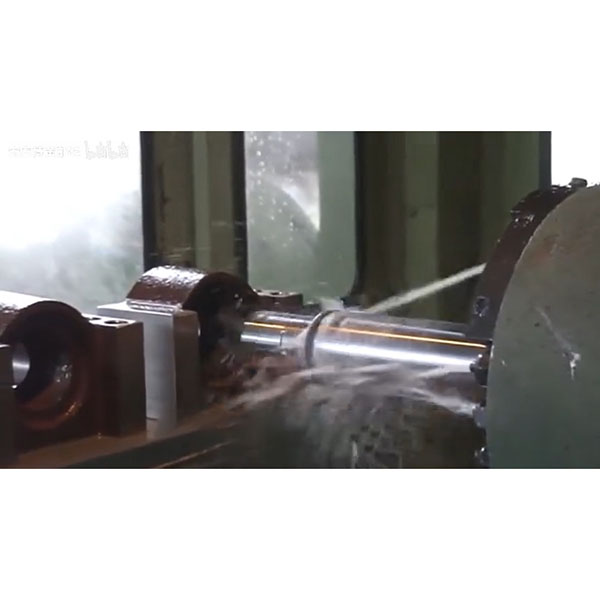
CNC boring services for large diameter accuracy holes
CNC boring is a process that uses CNC boring machines, machining centers, or horizontal boring mills to enlarge, correct, and finish existing holes with boring tools.
Description
CNC boring is primarily used to improve hole diameter precision, enhance coaxiality and positional accuracy, increase roundness and surface quality, and perform geometric correction under large‑diameter or deep‑hole conditions. Compared with simple drilling or reaming, boring offers greater advantages for large holes, high geometric accuracy requirements, and greater depths.
Applicable workpieces and typical scenarios for CNC boring:
- Large housings: such as gearboxes, machine tool beds, compressor casings, pump bodies, valve bodies.
- Engine and power components: cylinder blocks, bearing seat bores, crankshaft bearing bores.
- Hydraulic and pneumatic systems: hydraulic cylinders, valve blocks, distributor hole systems.
- Molds and jigs: mold base guide pillar holes, locating holes, high‑precision insert holes.
- Precision fit holes: bearing seats, bushings with interference/clearance fits, locating pin holes.
- Holes requiring subsequent honing or bushing press‑fit: used as prior geometric finishing.
Equipment and machining configurations:
- Horizontal Boring Mill (HBM): suitable for large workpieces and multi‑face hole composite machining.
- Machining centers (vertical/horizontal): paired with adjustable boring heads to achieve fine boring and composite surface machining.
- Dedicated CNC boring machines: for highly stable deep holes or high‑coaxiality hole systems.
- Turn‑mill centers: use eccentric boring tools or powered turrets to achieve hole correction plus surrounding features in one setup.
Tooling and workholding systems:
- Rough boring tools: high structural rigidity, used for removing large allowances.
- Fine boring heads: micrometer‑level radial adjustment mechanisms for precise sizing.
- Adjustable balanced boring heads: reduce eccentric vibration via counterweights or automatic adjustment.
- Damped (anti‑vibration) boring bars: for long overhang (deep hole) machining to reduce chatter and dimensional drift.
- Combination boring tools: integrated machining for multi‑step holes, stepped bores, and chamfers.
- Insert materials: coated carbide (TiAlN, AlTiN, CVD coatings), CBN (for hardened steels), PCD (for Al‑Si alloys).
- Workholding: precision chucks, hydraulic/heat‑shrink holders, modular holder systems to ensure low runout and stability.
Reference process flow for CNC boring:
- Drawing review: confirm bore tolerance, geometric requirements (coaxiality, position, roundness, perpendicularity), subsequent processes (reaming/bushing/honing).
- Datum establishment: plan clamping datums and machining sequence; first machine datums (faces, bores) that affect subsequent locating.
- Pre‑machining: drilling or leaving reasonable allowance on cast/forged blanks, typically a total allowance of 0.3 to 1.5 mm depending on bore diameter.
- Rough boring: remove allowance in layers, control depth of cut and feed to avoid heat concentration and wall tearing.
- Semi‑finish boring (optional): bring the bore close to final size and stabilize geometry to reduce errors in fine boring.
- Fine boring: small depth of cut and steady feed; use tool micro‑adjustment and program compensation to achieve final size.
- In‑process measurement: use touch probes or external measurement (inside micrometers, air gauges) to verify size and position; apply tool compensation when necessary.
- Secondary operations (optional): reaming, honing, burnishing, bushing press‑fit, or tapping.
- Cleaning and deburring: remove chips and burrs inside the bore to ensure fit quality.
- Final inspection and records: record dimensions, geometric accuracy, and surface condition into the quality traceability system.
Key process parameters for CNC boring:
- Spindle speed: based on bore diameter and tool material; rough boring generally uses low to medium speeds, fine boring appropriately higher for better finish (e.g., hundreds to thousands of rpm depending on diameter).
- Feed rate: higher for rough boring (e.g., 0.1 to 0.3 mm/rev), lower for fine boring (e.g., 0.02 to 0.12 mm/rev).
- Depth of cut per pass: rough boring 0.5 mm to 2.0 mm; fine boring typically 0.05 mm to 0.25 mm per pass.
- Cooling: high‑pressure or directed cooling for chip evacuation and temperature control; ensure smooth chip removal for aluminum and sticky materials.
- Tool runout control: check radial runout before fine boring (common requirement ≤0.01 mm, stricter according to tolerance).
- Anti‑vibration strategy: reduce feed and depth for long overhangs; use damped boring bars and reasonable overhang ratios (typically overhang ≤6D is easier to control).
Quality control and inspection:
- Dimensional inspection: inside micrometers, air gauges, and CMM for sampling and final inspection of critical bores.
- Geometric inspection: coaxiality, roundness, perpendicularity using roundness testers, CMM, or rotational measurement systems.
- Surface quality: measure Ra/Rz with a roughness tester; check for burn marks, tool marks, and chatter patterns on bore walls.
- SPC and data recording: track dimensional trends and tool wear curves in mass production to anticipate compensation.
- Traceability documents: archive material and heat treatment batches, machining parameters, and measurement reports.
Comparison of CNC boring with other hole‑making processes:
- Drilling: high efficiency for creating holes but limited in position correction and geometric accuracy; often used before boring.
- Reaming: improves size and surface but has weak position correction capability; commonly used for finishing after boring.
- Boring: focuses on geometric correction and high‑precision sizing; suitable for large bores and high geometric accuracy requirements.
- Honing: achieves very low roughness and minor geometric correction, often performed after boring.
- Burnishing (bore surface strengthening): enhances surface hardening and finish; requires stable bore geometry beforehand.
Application industry examples for CNC boring:
- Construction machinery and heavy equipment: large bases, housing alignment bores, and bearing seat bores.
- Energy and chemical: pump bodies, compressor housings, valve body hole systems.
- Automotive and engine manufacturing: main bearing bores in cylinder blocks, camshaft bearing seats.
- Aerospace: geometric correction of high‑precision structural parts and mechanism bores.
- Molds and precision tooling: guide pillar bores, locating bores, and pre‑bores for cooling channels.
- Hydraulic systems: valve blocks, oil passage bores, pre‑precision bores for multi‑face intersecting holes.