
 English
  Français
  Tiếng Việt
  Italiano
  Nederlands
  Türkçe
  Svenska
  Polski
  Română
  Latviešu
  한국어
한국어  Русский
  Español
  Deutsch
  Українська
  Português
  العربية
  Indonesian
  Čeština
  Suomi
Suomi  Eesti
Eesti  Български
  Dansk
Dansk  Lietuvių
  Bokmål
  Slovenčina
  Slovenščina
  Ελληνικά
  Magyar
  עברית
עברית 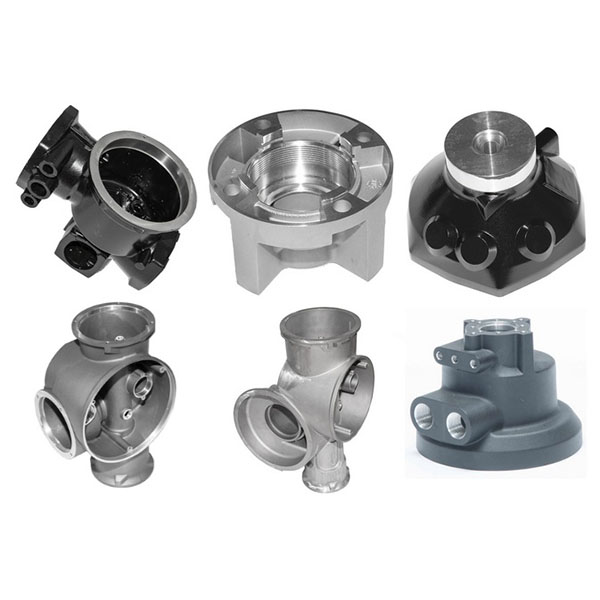
cast valve body for durable industrial and marine service
cast valve body provides a robust cast housing and flow passage structure for various types of valves, supporting the valve trim, seats, stems and sealing elements, withstanding pipeline media pressure and temperature, and ensuring long-term stable valve operation.
depending on the operating conditions, cast valve body can be made from gray cast iron, ductile/nodular cast iron, stainless steel, brass, bronze, alloy steel or duplex stainless steel. cast valve body can meet general industrial water and steam system requirements and is also suitable for demanding conditions such as chemical processing, seawater, oil and gas, and high-temperature high-pressure applications.
key features:
- robust structure: integral casting provides uniform stress distribution, good fatigue resistance, and is suitable for high-pressure and large-diameter valve requirements.
- excellent sealing-surface design: valve seats and sealing faces are precision machined and heat-treated to ensure proper fit and long-term tightness, reducing leakage risk.
- corrosion and wear resistance: corrosion-resistant materials can be selected according to media, or surface protection treatments such as surface hardening, coating, or electroplating can be applied to extend service life.
- precision machining: cnc machining, boring and grinding processes ensure valve trim guidance, concentricity of valve seats, and geometric tolerances of mating surfaces.
- customizable: supports production to customer drawings or samples, adjustment of cavity flow passages, wall thickness, interface standards (flanges, threads) and special material processing.
- easy maintenance: reasonable cavity layout and maintenance port design facilitate disassembly, inspection and replacement of sealing elements, reducing maintenance costs.
quality control:
- chemical composition and metallographic inspection: spectrochemical analysis and metallographic inspection confirm that material structure and composition meet specifications.
- nondestructive testing: ultrasonic, radiographic or magnetic particle inspection is used to detect internal inclusions, cracks and porosity.
- dimensional and geometric tolerance inspection: coordinate measuring machine (cmm) checks critical dimensions, concentricity and flatness.
- mechanical properties testing: tensile, hardness and impact tests are performed according to specifications and test reports are provided.
- pressure and sealing tests: hydrostatic, pneumatic or pressure-vacuum tests are conducted per customer or standard requirements to ensure pressure resistance and sealing reliability.
application areas:
cast valve body is suitable for gate valves, globe valves, check valves, throttling valves, cast-body ball valves, butterfly valves and other valve types. it is widely used in oil and gas, chemical processes, seawater desalination, marine engineering, power, boiler and steam systems, water supply and wastewater treatment, hvac, shipbuilding and metallurgy.