
 English
  Français
  Tiếng Việt
  Italiano
  Nederlands
  Türkçe
  Svenska
  Polski
  Română
  Latviešu
  한국어
한국어  Русский
  Español
  Deutsch
  Українська
  Português
  العربية
  Indonesian
  Čeština
  Suomi
Suomi  Eesti
Eesti  Български
  Dansk
Dansk  Lietuvių
  Bokmål
  Slovenčina
  Slovenščina
  Ελληνικά
  Magyar
  עברית
עברית 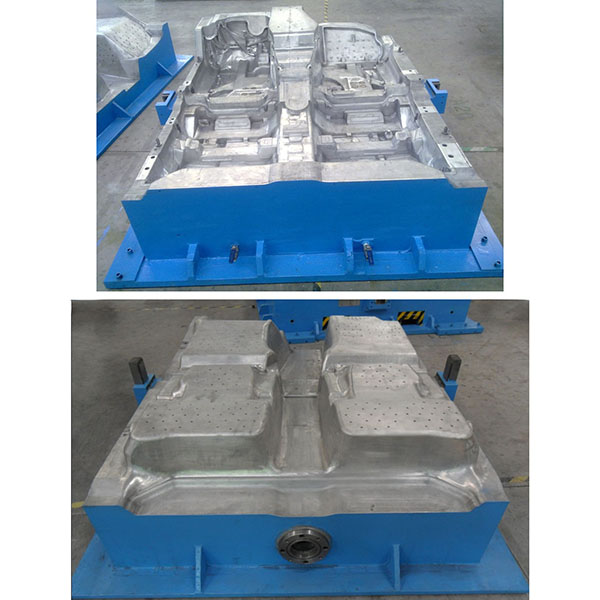
carpet foam mold for enhanced insulation and long life
Carpet foam molds are used to form foam backings in one step on carpet backings or finished products; through injection, pour-in, or pour-casting foaming processes they create uniform closed-cell or semi-closed-cell foam layers within the mold cavity.
Carpet foam molds can significantly enhance a carpet’s cushioning, thermal insulation, and wear resistance while enabling a reliable bond between the backing and the fabric. They are widely applicable to home carpets, commercial carpets, stair treads, automotive carpets, and sports venue carpets.
Key features of carpet foam molds:
- Foam uniformity: Precisely designed cavity runners and gate layouts ensure consistent foam density and closed-cell ratio, resulting in stable resilience, durability, and thermal insulating performance.
- Adhesion and bonding strength: With appropriate pre-treatment and surface design coordinated with the mold, the foam layer forms a strong bond with the carpet face or substrate, reducing the risk of delamination.
- Structural and weight-optimization: Through zoned mold design and wall-thickness optimization, the mold meets load-bearing and cushioning requirements while minimizing weight and material cost.
- Temperature control and venting design: Reasonable heating and cooling zoning combined with efficient venting shorten cure cycles, reduce bubble defects, and improve yield and throughput.
- Production efficiency: Supports multi-cavity and multi-stage continuous production layouts and adapts to automated loading/unloading equipment, significantly increasing output per unit time.
- Mold life and maintenance: Uses corrosion-resistant alloy steel, surface nitriding or hard coating treatments, and replaceable inserts to reduce chemical and wear damage to cavities, facilitate localized repairs, and extend service life.
- Environmental performance and safety: Can be paired with low-VOC, low-odor, or non-toxic foam formulations and supports flame-retardant systems to meet various regulatory standards and application requirements.
Applicable materials:
Compatible with a variety of foam material systems and formulations, including polyurethane (PU), EVA, EPE, and polyester-based composite foams. Formulations can be adjusted according to requirements for cushioning, rebound, flame-retardant rating, operating temperature, and chemical resistance.
Application scenarios:
Home carpets, office and commercial flooring carpets, anti-slip stair treads, automotive and RV carpets, sports surfaces and gym mats, portable carpets or interlocking mats, and other products requiring cushioning, thermal insulation, anti-slip, or shock-absorbing properties.