
 English
  Français
  Tiếng Việt
  Italiano
  Nederlands
  Türkçe
  Svenska
  Polski
  Română
  Latviešu
  한국어
한국어  Русский
  Español
  Deutsch
  Українська
  Português
  العربية
  Indonesian
  Čeština
  Suomi
Suomi  Eesti
Eesti  Български
  Dansk
Dansk  Lietuvių
  Bokmål
  Slovenčina
  Slovenščina
  Ελληνικά
  Magyar
  עברית
עברית 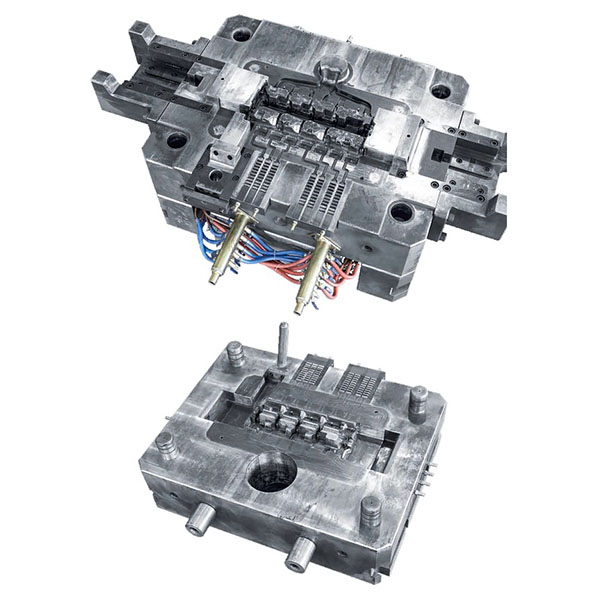
camshaft cover die casting mould for engine components
Camshaft cover die casting mould is used for high-precision mass production of engine camshaft cover parts made of aluminum or magnesium alloys.
Description
Camshaft cover die casting mould performs the critical functions of injecting molten metal, forming, venting, and cooling control, directly affecting the dimensional accuracy, surface quality, and assembly fit of the parts. We provide a one-stop mould development and delivery service from design review, moldflow analysis, material selection, mould manufacturing, and trial verification to mass production support.
Design and engineering review:
- Moldflow analysis: Use CAE moldflow simulation to evaluate gating systems, filling sequence, solidification paths, and porosity risks, and to optimize gate locations and venting schemes.
- Structural design: Reasonably determine parting lines, ejection mechanisms, slides, and locating solutions to ensure easy assembly, reliable demolding, and reduced secondary machining.
- Durability and maintainability: Design replaceable parts at critical wear locations, such as wear sleeves and replaceable core inserts, and reserve space for repairs to facilitate future maintenance.
Processing and manufacturing procedures for Camshaft cover die casting mould:
- CNC machining: Use 5-axis or multi-axis CNC machines for roughing and finishing to ensure cavity geometric accuracy and datum consistency.
- Wire cutting / EDM / WEDM: Used for precision machining of complex cavities, fine features, and high-hardness materials and for mold opening operations.
- Heat treatment: Perform quenching, tempering, or quench-and-temper treatments according to material and service life requirements to control distortion and achieve required hardness and toughness.
- Precision grinding and polishing: Mirror or specified texture polish sealing surfaces, appearance surfaces, and mating faces to meet aesthetic and assembly requirements.
- Assembly and commissioning: Install cooling channels, locating pins, ejection systems, and slides; perform clearance, stroke, and motion tests to ensure reliable operation.
Trial molding and optimization:
- First-piece trial: During the trial phase, produce the first die-cast parts, inspect dimensions, wall thickness consistency, filling and cooling performance, and record operating parameters and anomalies.
- Defect analysis and correction: Based on defects such as flash, shrinkage holes, cold shuts, or burn marks, iteratively modify the gating system, venting, or temperature control and perform localized repairs.
- Process confirmation: Determine injection speed, holding pressure, solidification/setting time, mold temperature, and demolding conditions; produce a trial report and process card for mass production reference.
Applicable industries and typical applications for Camshaft cover die casting mould:
- Suitable for medium-to-high-volume production of automotive engine and transmission-related parts, such as camshaft covers, brackets, and sealing components.
- Also suitable for industrial machinery, engineering equipment, and the production of structural parts requiring high-precision assembly fit.