
 English
  Français
  Tiếng Việt
  Italiano
  Nederlands
  Türkçe
  Svenska
  Polski
  Română
  Latviešu
  한국어
한국어  Русский
  Español
  Deutsch
  Українська
  Português
  العربية
  Indonesian
  Čeština
  Suomi
Suomi  Eesti
Eesti  Български
  Dansk
Dansk  Lietuvių
  Bokmål
  Slovenčina
  Slovenščina
  Ελληνικά
  Magyar
  עברית
עברית 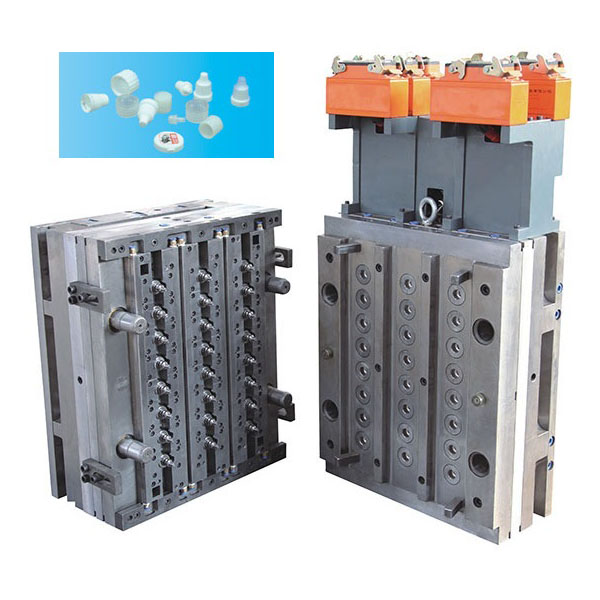
bottle cap injection mould for consistent seals and fit
Bottle cap injection molds are used for efficient mass production of various types of bottle caps, including tamper-evident caps, screw caps, push-and-twist caps, sealing caps, and sports bottle caps.
Description
Bottle cap injection molds emphasize dimensional accuracy, sealing performance, and mold durability, while maintaining appearance quality and functional fit. They accommodate a variety of engineering plastics and elastic materials and are widely used in the food & beverage, pharmaceutical, personal care, and industrial liquid packaging sectors.
Typical applications:
- Screw or push caps for beverage bottles, mineral water bottles, and functional drinks.
- Sealing and easy-open caps for food and condiment containers.
- Child-resistant caps and sealed packaging for pharmaceuticals and health products.
- Pump heads, droppers, and twist caps for household chemicals and personal care products.
- Functional caps and interfaces for industrial lubricants and chemical containers.
Product features and customer value:
- High-precision dimensional control: ensures sealing and easy-opening compatibility with bottle necks, reducing leakage and backflow risks.
- Excellent sealing performance: precise gating and cooling design enable stable compression of gaskets and sealing faces, improving airtightness and liquid-tightness.
- Fast cycles and high throughput: optimized cavity layout and runner design shorten molding cycles and increase output and production efficiency.
- Surface quality and consistency: supports mirror finish or a variety of textures to meet labeling, printing, and visual appearance requirements.
- Mold longevity and maintenance friendliness: use of wear-resistant materials and appropriate cooling/venting design extends mold life and reduces maintenance frequency.
Mold structure and design considerations:
- Cavity type and cavity count: select single-cavity or multi-cavity molds according to part size and target output; multi-cavity arrangements are commonly used to increase capacity and reduce per-piece cost.
- Gating system: prefer hot-runner systems for high-appearance parts to reduce gate defects; use micro gates or valve-pin gates for thin-wall or fine structures to minimize marks.
- Cooling and temperature control: uniform and efficient cooling circuits are critical to maintaining dimensional stability and shortening cycle time; use localized heating or temperature controllers when necessary.
- Venting and ejection: design effective venting and appropriate ejection mechanisms for complex threads, internal grooves, or thin-wall features to avoid burning, snagging, or deformation.
- Thread and sealing-face machining: perform precision machining and inspection of thread accuracy, roundness, and sealing faces; apply coatings or surface hardening where necessary to improve wear resistance.
- Mold materials and heat treatment: use high-hardness, wear-resistant steels and appropriate heat treatments for key cores, cavities, and guide pillars to enhance mold durability and corrosion resistance.
Injection molding process and mass-production flow for bottle cap molds:
- Initial trial molding and parameter verification: verify balanced filling, thread formation, holding behavior, and cooling shrinkage; adjust gate location and wall-thickness distribution as needed.
- Process locking: determine injection speed, holding-pressure profile, screw speed, mold temperature, and cooling time, and generate standard operating procedures (SOPs).
- Production control: use SPC to monitor critical dimensions and appearance, employ online vision inspection systems to detect surface defects, and implement automatic rejection or manual reinspection as required.
- Post-processing and functional testing: perform deburring, heat-staking/insert assembly, and conduct sealing tests, torque tests, and opening-force tests to ensure each batch meets performance requirements.