
 English
  Français
  Tiếng Việt
  Italiano
  Nederlands
  Türkçe
  Svenska
  Polski
  Română
  Latviešu
  한국어
한국어  Русский
  Español
  Deutsch
  Українська
  Português
  العربية
  Indonesian
  Čeština
  Suomi
Suomi  Eesti
Eesti  Български
  Dansk
Dansk  Lietuvių
  Bokmål
  Slovenčina
  Slovenščina
  Ελληνικά
  Magyar
  עברית
עברית 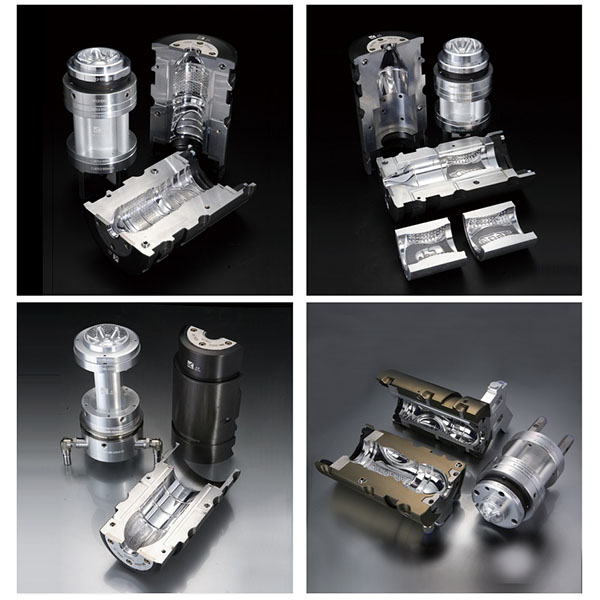
bottle blow mold custom design and fast delivery services
Through precise cavity design, optimized cooling systems, and reliable ejection mechanisms, bottle blow molds achieve high output, dimensional consistency, and good surface quality in bottle production.
Description
the bottle blow mold is a dedicated mold used for blow molding plastic containers, compatible with extrusion blow molding, injection blow molding, or stretch blow molding processes. bottle blow molds are suitable for continuous production lines and automated production lines, and can meet the container consistency and safety requirements of the food and beverage, daily chemical, and pharmaceutical industries.
main features of the bottle blow mold:
- high-precision cavities: manufactured with precision machining and polishing processes to ensure smooth bottle appearance, uniform inner diameter and wall thickness, meeting high-quality appearance requirements.
- optimized cooling: design cooling channels for critical areas such as the neck, shoulder, and bottom to accelerate setting and shorten cycle times, improving productivity.
- automation compatibility: mold structures compatible with automatic bottle removal, ejection, and conveying systems, reducing manual intervention and enhancing production stability.
- multi-process adaptability: mold structure and material selection can be optimized according to process types (such as isbm, ebm, sbm) to meet different process requirements for temperature, stress, and extensibility.
- durable and easy to maintain: use high-strength mold steels with surface treatments (such as nitriding, coatings, etc.) to enhance wear and corrosion resistance and reduce downtime for maintenance.
- strong customization capability: provide personalized design of cavity counts, cooling layouts, and venting solutions based on container shape, capacity, material, and production requirements.
design and manufacturing key points:
- cavity design and wall thickness control: optimize cavity contours and wall thickness distribution according to bottle shape requirements and material flowability to avoid uneven thickness causing deformation or flashing.
- cooling and venting design: design efficient cooling circuits and venting slots in areas of concentrated heat to prevent streaking, bubbles, and incomplete molding defects.
- tolerances and fits: set strict tolerances for critical dimensions such as cap mating surfaces and neck threads to ensure compatibility with subsequent assembly and sealing.
- surface treatments and coatings: apply nitriding or hard coatings to areas prone to wear or material adhesion to extend service life and facilitate demolding.
- tryout and process validation: after mold manufacture, conduct tryout validation and adjust cooling, blowing, stretching, and ejection parameters until first articles meet specifications.
materials and process recommendations:
- common mold materials: select high-strength, heat-resistant and wear-resistant mold steels suitable for blow molding conditions, and combine surface heat treatments to extend life.
- compatible resins: for different plastics such as pet, pp, pe, adjust mold temperature control and cooling strategies to match material rheology and crystallization characteristics.
- cycle stability: optimize forming parameters (blow pressure, stretch ratio, holding time, etc.) to ensure dimensional and performance stability within cycles.
applicable scope:
- various beverage industry pet containers, such as water bottles, carbonated bottles, hot-fill bottles, aseptic bottles, etc.
- containers for other industries, such as edible oil, condiments, cosmetics, personal protective products, pharmaceuticals, etc.