
 English
  Français
  Tiếng Việt
  Italiano
  Nederlands
  Türkçe
  Svenska
  Polski
  Română
  Latviešu
  한국어
한국어  Русский
  Español
  Deutsch
  Українська
  Português
  العربية
  Indonesian
  Čeština
  Suomi
Suomi  Eesti
Eesti  Български
  Dansk
Dansk  Lietuvių
  Bokmål
  Slovenčina
  Slovenščina
  Ελληνικά
  Magyar
  עברית
עברית 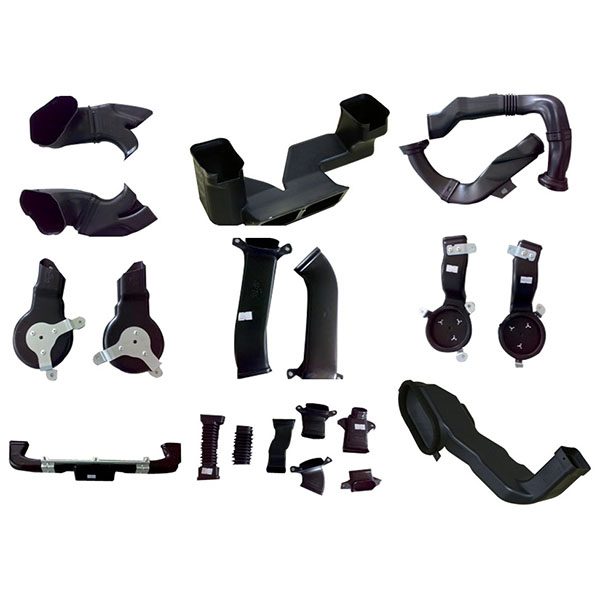
blow molded automotive air conditioning ducts durable
Blow-molded automotive air-conditioning ducts and air distribution components manufactured by blow-molding processes are suitable for HVAC and ventilation systems in passenger cars, commercial vehicles, and specialized vehicles.
Description
Blow-molded automotive air-conditioning ducts are designed for lightweight construction, dimensional stability, and aerodynamic optimization. They support complex cross-sections and integrated structures, facilitate assembly and mass production, and can be customized in shape, interfaces, and surface treatments to meet vehicle model and installation requirements.
Core selling points of blow-molded automotive air-conditioning ducts:
- Integrated blow-molded construction: The blow-molding process enables continuous forming of complex cross-sections, reducing seams and bonding points, lowering leakage risk, and improving structural strength and vibration resistance.
- Lightweight and durable: Engineered plastic materials such as PP, PE, TPO, etc., are used for weight optimization while providing heat resistance, aging resistance, and weatherability to withstand in-vehicle temperatures and vibration environments.
- Flowpath and aerodynamic optimization: Internal contours and cross-section designs can reduce airflow resistance and noise, improving HVAC system efficiency and passenger comfort.
- Precise fitment and easy assembly: Molds can be designed to match vehicle-specific interface dimensions and mounting points to ensure quick connections to fans, panels, and flexible hoses, reducing assembly time.
- Multiple material and surface treatment options: Materials can be selected per application (flame-retardant, oil-resistant, chemically resistant formulations), and surface finishes such as painting, texturing, or welded marking can be provided to meet appearance or functional requirements.
- Cost and production capacity advantages: Blow-molding is well suited for medium- to large-volume production, offering long mold life and short cycle times, which supports mass delivery and cost control.
Applicable scenarios for blow-molded automotive air-conditioning ducts:
- Passenger vehicle HVAC systems: dashboard outlets, door panel outlets, roof and rear passenger air ducts.
- Commercial vehicles and coaches: large main air trunks, distribution branches, and passenger compartment air delivery systems.
- New energy vehicles: ventilation or cooling guidance components used in EV lightweighting and motor thermal management applications.
- Special-purpose vehicles and construction machinery: HVAC and ventilation solutions for dustproof, oil-resistant, or high-temperature environments.