
 English
  Français
  Tiếng Việt
  Italiano
  Nederlands
  Türkçe
  Svenska
  Polski
  Română
  Latviešu
  한국어
한국어  Русский
  Español
  Deutsch
  Українська
  Português
  العربية
  Indonesian
  Čeština
  Suomi
Suomi  Eesti
Eesti  Български
  Dansk
Dansk  Lietuvių
  Bokmål
  Slovenčina
  Slovenščina
  Ελληνικά
  Magyar
  עברית
עברית 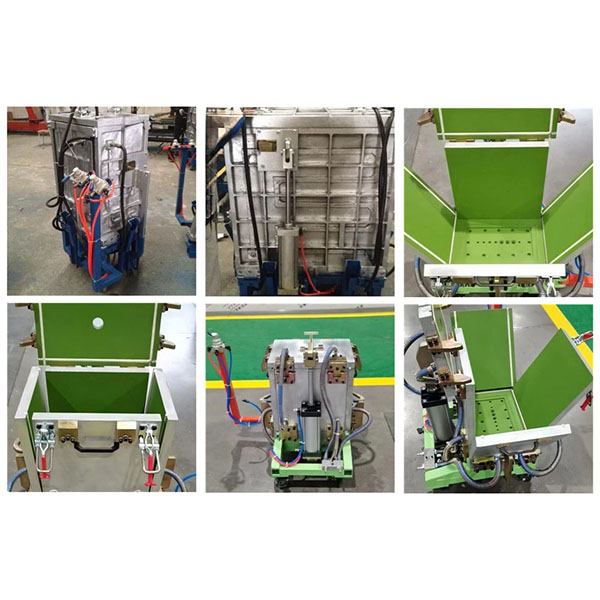
automotive refrigerator foam mold for insulated coolers
Automotive refrigerator foam molds can be used for one-step foam molding of insulation layers, inner liner support structures, and composite parts, accommodating different outer shell and inner liner size requirements.
Automotive refrigerator foam molds are used to produce insulation layers and thermal core materials for vehicle refrigerators. Through foam injection or pour-in-foam processes, they form uniform closed-cell or semi-closed-cell foam structures within the mold cavity, significantly improving thermal insulation performance and reducing thermal bridging effects.
If optimization for insulation performance, flame-retardant rating, material system, or production capacity is required, please provide the target refrigerator dimensions, desired insulation performance (e.g., R-value or 24h temperature rise), material preferences, and annual production capacity; we can then customize the mold structure and foaming process parameters accordingly to ensure the finished product achieves a balance between performance and production efficiency.
Key features of automotive refrigerator foam molds:
- Foam uniformity: The mold precisely controls cavity runners and gate distribution to ensure uniform foam density and closed-cell ratio, thereby achieving stable thermal conductivity and excellent insulation performance.
- Thermal bridging and structural optimization: By optimizing wall thickness and foam layer layout through mold design, thermal bridge pathways are effectively reduced while meeting structural support and lightweighting requirements.
- Applicable materials: Compatible with various foam material systems, such as polyurethane (PU), polyisocyanurate (PIR), epoxy, and polyester-based composite foams; formulations can be selected according to fire rating, flexibility/rigidity requirements, and environmental temperature.
- Molding efficiency: The mold adopts reasonable cooling/heating zoning and venting design to shorten cure cycles and cycle times, improving production efficiency and reducing energy consumption.
- Mold life and maintenance: Corrosion-resistant alloy steel, surface hardening treatments, and replaceable inserts are used to reduce cavity wear from injected chemicals and to facilitate local repair and replacement, extending service life.
- Customization capability: Supports multi-cavity or combined-cavity designs to fit different capacities and shapes of automotive refrigerators; can reserve mounting holes, bracket locating slots, and wiring channels to achieve integrated structures.
- Environmental and safety: Low-VOC, low-odor, or non-toxic formulations can be selected per customer requirements, and flame-retardant systems and material solutions that comply with industry regulations are supported.
- Application scenarios: Insulating liners for automotive refrigerators in passenger cars, RVs, commercial vehicles, and special vehicles; portable coolers; cold-chain transport boxes; and other products requiring high thermal insulation and lightweighting.