
 English
  Français
  Tiếng Việt
  Italiano
  Nederlands
  Türkçe
  Svenska
  Polski
  Română
  Latviešu
  한국어
한국어  Русский
  Español
  Deutsch
  Українська
  Português
  العربية
  Indonesian
  Čeština
  Suomi
Suomi  Eesti
Eesti  Български
  Dansk
Dansk  Lietuvių
  Bokmål
  Slovenčina
  Slovenščina
  Ελληνικά
  Magyar
  עברית
עברית 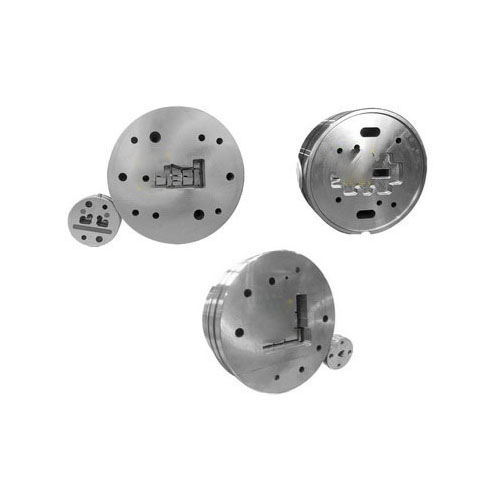
automotive profile extrusion die for bumper trim sections
The automotive profile extrusion die is specifically designed for the continuous production of structural and functional profiles for the automotive industry, aiming to meet manufacturing requirements for high-precision section shapes, strict dimensional tolerances, and long-term stable production capacity.
Description
The automotive profile extrusion die is suitable for extrusion processing of various materials such as aluminum alloys, engineering plastics, and composite materials. With optimized flow channels and die cavities, it can maintain excellent surface quality and geometric accuracy in high-capacity extrusion environments, reducing downstream machining and assembly adjustments.
Technical specifications:
- Applicable materials: aluminum profiles, engineering plastics (PVC/PE/PP/ABS/PC, etc.), and composite materials.
- Die material: commonly tool steel or aluminum alloy die bodies; critical working surfaces are heat-treated and surface-strengthened (e.g., nitriding, coating, or shot peening) to improve wear resistance and anti-adhesion performance.
- Production mode: continuous extrusion forming, combined with stretching, cooling, traction, and cutting processes, suitable for automated extrusion production lines.
- Accuracy and tolerances: high repeatability in cross-section dimension control and fit tolerances can be achieved depending on profile cross-section complexity and material characteristics (specific tolerances to be confirmed based on drawings and process conditions).
- Service life and maintenance: die life depends on material, production volume, and maintenance; proper operation and regular maintenance help extend service life and ensure long-term stable operation.
Main features:
- Precise cross-section control: precisely designed die cavities and die lips ensure dimensional and geometric accuracy of extruded profiles, reducing downstream machining and assembly adjustments.
- Flow channel and temperature control optimization: reasonable melt flow distribution and temperature management reduce stagnation, foaming, or deformation defects, improving profile surface finish and internal density.
- High strength and wear resistance: die materials treated with heat treatment and surface-strengthening processes significantly improve wear resistance and anti-adhesion, reducing maintenance frequency and downtime costs.
- Modular design and maintainability: supports segmented, insert, or replaceable module structures, facilitating rapid replacement of wear parts, section detail adjustments, or structural upgrades, shortening downtime for maintenance.
- Precision machining and assembly interfaces: employing high-precision processes such as CNC and EDM, together with strict assembly and alignment procedures, ensures accurate die gaps and mating surfaces for seamless integration with extrusion, traction, and cooling systems.
- Balancing capacity and energy efficiency: optimizing die heat dissipation and flow channel design while meeting product quality requirements helps reduce energy consumption and improve production efficiency.
Applications:
- Exterior and decorative automotive profiles, such as door/window seals, trim, and edge bands.
- Body structural profiles and reinforcements, including lightweight aluminum and composite profiles.
- Functional profiles such as guide rails, channels, seals, and wiring harness sleeves.
- Interior and cabin structural profiles, including frames, fasteners, and decorative components.
- Housings and cable-tray profiles for automotive electronics and electrical components.
- Other automotive-specific profile production scenarios requiring high strength, high dimensional consistency, and long-term durability.