
 English
  Français
  Tiếng Việt
  Italiano
  Nederlands
  Türkçe
  Svenska
  Polski
  Română
  Latviešu
  한국어
한국어  Русский
  Español
  Deutsch
  Українська
  Português
  العربية
  Indonesian
  Čeština
  Suomi
Suomi  Eesti
Eesti  Български
  Dansk
Dansk  Lietuvių
  Bokmål
  Slovenčina
  Slovenščina
  Ελληνικά
  Magyar
  עברית
עברית 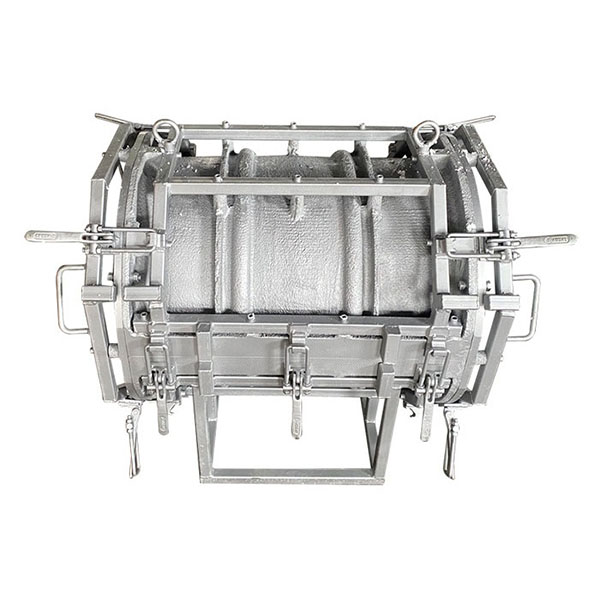
aluminum rotational molding mold for rugged industrial
Aluminum rotational molding molds are precision machined from high-quality aluminum alloys, specifically designed for the rotational molding (rotomolding) process, and are suitable for producing plastic products in small-to-medium batches with high precision and diverse shapes.
Description
Compared with conventional steel or cast-iron molds, aluminum molds offer faster heat conduction, lighter weight, higher machining accuracy, and easier mold changeover, enabling stable control of mold cavity temperature and wall thickness distribution, improving product surface quality and shortening production cycles.
Main features of the aluminum rotational molding mold:
- Excellent thermal conductivity: Aluminum alloys have high thermal conductivity, which helps the mold heat up quickly and cool uniformly, improving wall thickness uniformity and shortening cycle time.
- High machining accuracy: CNC milling, machining centers, and precision milling machines ensure mold cavity dimensional accuracy and fit tolerances, meeting the needs of complex shapes.
- Lightweight design: Lighter than steel molds, easier to transport and install, reducing mold handling and setup costs.
- Good surface quality: The mold cavity surface is easy to polish or sandblast, directly affecting part appearance and release performance.
- Cost-life balance: Aluminum mold material cost is lower than high-grade steels, making it suitable for small-to-medium batch production; with proper maintenance it also provides a good service life.
- Capable of producing complex structures: Suitable for mold designs with complex internal cavities, variable curved surfaces, or requirements to optimize space utilization.
- Rapid thermal response: Faster temperature response shortens heating/cooling cycles and improves production efficiency.
Structure and manufacturing process of the aluminum rotational molding mold:
- Material selection: Common aluminum alloys such as 6061 or 6082 are used, or higher-strength aluminum can be specified as required; heat treatment may be applied to improve wear resistance and stability.
- Processing methods: CAD/CAM design, CNC machining, wire EDM, and precision milling are used to manufacture mold cavities and mating surfaces accurately.
- Connection and sealing: Molds use high-strength bolt connections, locating pins, and reliable sealing designs to ensure assembly accuracy and sealing performance, reducing material leakage or flashing issues.
- Cooling and heating design: Internal water channels or heating jackets can be designed according to product process requirements, with temperature control systems used to optimize the molding cycle.
- Surface treatment: Mold cavities can be polished, e-coated (electrophoretic coating), or anodized to enhance corrosion resistance and surface hardness, facilitating long-term use and maintenance.
Applications:
- Suitable for a wide range of rotationally molded products such as automotive components, fuel tanks, chemical containers, storage boxes, military equipment housings, outdoor enclosures, and children’s toys.
- Appropriate for product lines that demand fast thermal response, high surface quality, and small-to-medium batch production.