
 English
  Français
  Tiếng Việt
  Italiano
  Nederlands
  Türkçe
  Svenska
  Polski
  Română
  Latviešu
  한국어
한국어  Русский
  Español
  Deutsch
  Українська
  Português
  العربية
  Indonesian
  Čeština
  Suomi
Suomi  Eesti
Eesti  Български
  Dansk
Dansk  Lietuvių
  Bokmål
  Slovenčina
  Slovenščina
  Ελληνικά
  Magyar
  עברית
עברית 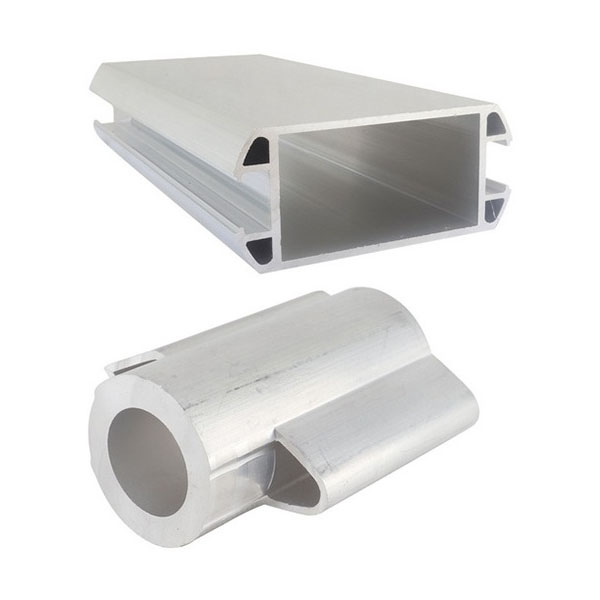
aluminum profile die-cast parts for lightweight frames
Aluminum profile die-cast parts combine aluminum materials with profile structures efficiently through high-pressure die casting, enabling mass production of metal parts with high strength, good dimensional stability, and superior surface quality.
Description
Aluminum profile die-cast parts are widely used in lightweight frames, heat-dissipation structures, assembly joints, and aesthetic components, balancing structural performance and decorative appearance. They are suitable for applications across industries such as industrial equipment, vehicles, lighting, and architectural fittings.
Main materials and characteristics of aluminum profile die-cast parts:
- Aluminum alloy base material: Common grades include ADC12, A380, or high-strength/high-ductility aluminum alloys selected according to the application; these feature low density, good thermal conductivity, and corrosion resistance.
- Advantages of integration with profiles: Die casting forms an integrated joint at the ends or connector plates of aluminum profiles, enhancing joint strength and reducing assembly steps.
- Mechanical properties and durability: They can achieve relatively high yield strength and fatigue resistance, making them suitable for load-bearing or stressed connectors and support parts.
- Machinability: Secondary machining (turning, milling, drilling, tapping) can be performed after die casting to meet tight-fit and sealing surface precision requirements.
Design recommendations:
- Wall thickness and transitions: It is recommended to use uniform wall thickness and incorporate fillets for transitions to avoid stress concentration and cold shut defects.
- Gating and runner layout: Optimize gate locations and flow distribution based on mold-flow simulation to ensure complete filling and reduce shrinkage and porosity.
- Ribs and stiffening structures: Use appropriately designed ribs in areas requiring increased stiffness, while ensuring rib thickness is coordinated with the main wall thickness.
- Assembly allowances and tolerances: Leave machining allowances for critical mating surfaces, specify fit tolerances, and indicate heat treatment or surface requirements on the drawings.
Surface treatments and post-processing:
- Anodizing: Improves corrosion resistance and enables multi-color surface finishes; commonly used for exposed and decorative parts.
- Painting and powder coating: Provide weather resistance and wear protection while meeting color and visual consistency requirements.
- Mechanical and chemical polishing: Improve surface smoothness to enhance appearance or reduce friction.
- Secondary machining: Perform high-precision machining on critical mating surfaces, threads, or locating holes to achieve assembly requirements.
Typical application scenarios of aluminum profile die-cast parts:
- Aluminum profile frame connectors: end connectors for doors and windows, curtain walls, display racks, and lightweight frames.
- Heat dissipation and support structures: mounting seats for LED heat sinks and support components for electronic device cooling modules.
- Industrial assembly parts: equipment frames, rail fasteners, and removable joints.
- Architectural and furniture hardware: handrail connectors, handle bases, and decorative fasteners.