
 English
  Français
  Tiếng Việt
  Italiano
  Nederlands
  Türkçe
  Svenska
  Polski
  Română
  Latviešu
  한국어
한국어  Русский
  Español
  Deutsch
  Українська
  Português
  العربية
  Indonesian
  Čeština
  Suomi
Suomi  Eesti
Eesti  Български
  Dansk
Dansk  Lietuvių
  Bokmål
  Slovenčina
  Slovenščina
  Ελληνικά
  Magyar
  עברית
עברית 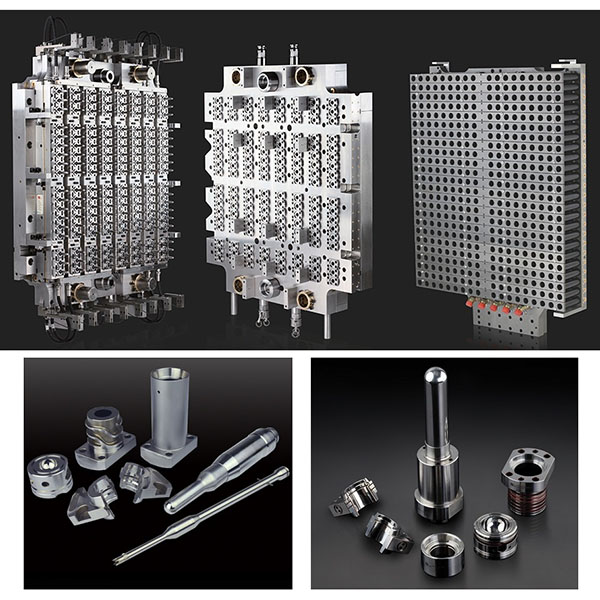
advanced injection blank mold for premium quality bottles
An injection blank mold is a dedicated injection mold used for batch production of “blank parts”, injection molded parts that leave functional faces or details unfinished and reserved for subsequent processing, printing, or assembly.
Description
Injection blank molds are typically used to produce plastic blanks that require subsequent processing such as punching, cutting, pad printing, electroplating, or assembly. They are widely used in fields including electronic product enclosures, medical device components, automotive interior parts, consumer electronics, stationery, and industrial components.
Key features:
- High-precision molding: Precision cavity machining and mold alignment design ensure dimensional consistency and positioning accuracy of the blank parts, facilitating subsequent processing and assembly.
- Customizable design: Support for single-cavity, multi-cavity, removable cores, hot-runner or cold-runner systems, customized according to product structure and production volume requirements.
- Optimized cooling system: Rational layout of cooling channels shortens molding cycle time, improves production efficiency, and ensures warpage control and dimensional stability.
- Durable and long life: Made from high-quality mold steels (such as P20, H13, S136, etc.) and treated with vacuum heat treatment/tempering; mold life can reach hundreds of thousands to millions of cycles.
- Post-processing friendly: Mold designs include precise locating holes / datum surfaces to facilitate rapid positioning for subsequent punching, pad printing, laser engraving, or assembly operations.
Advantages and value:
- Lower downstream processing costs: High-precision reserved features and unified datums make subsequent processing faster and more stable.
- Improved consistency and yield: Robust mold manufacturing and thermal management reduce the defect rate.
- Shorter production cycles: Optimized cooling and runner designs increase molding speed and make capacity more controllable.
- Strong scalability: One mold can cover different stages from small pilot runs to large-scale mass production.
Common application scenarios for injection blank molds:
- Electronic enclosures: phone accessories, remote controls, sensor housings, etc.
- Medical devices: disposable or reusable housings and components (meeting material and cleanliness requirements).
- Automotive interiors: panels, brackets, and rail-type blank components.
- Home appliances and tools: housings, mounting bases, and features reserved for later functions.