
 English
  Français
  Tiếng Việt
  Italiano
  Nederlands
  Türkçe
  Svenska
  Polski
  Română
  Latviešu
  한국어
한국어  Русский
  Español
  Deutsch
  Українська
  Português
  العربية
  Indonesian
  Čeština
  Suomi
Suomi  Eesti
Eesti  Български
  Dansk
Dansk  Lietuvių
  Bokmål
  Slovenčina
  Slovenščina
  Ελληνικά
  Magyar
  עברית
עברית 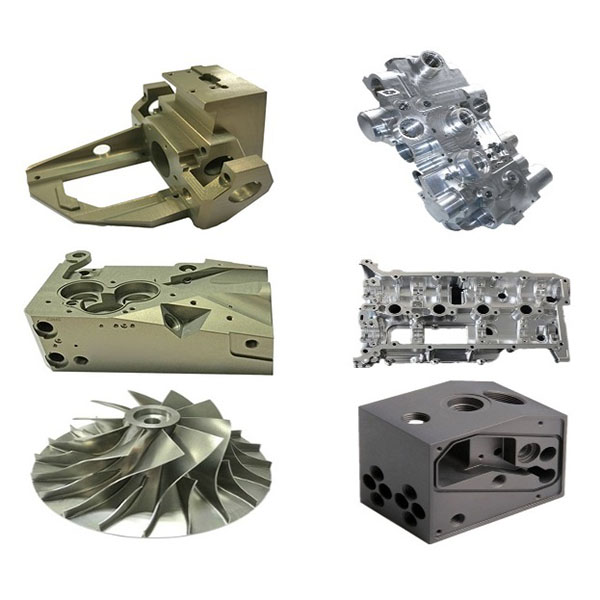
5-axis CNC machining of complex parts for industry
We provide professional five‑axis simultaneous CNC machining services focused on single‑setup, high‑precision manufacturing of parts with complex freeform surfaces, deep cavities, inclined surfaces, and polyhedral structures.
The workshop is equipped with advanced continuous five‑axis and 3+2 positioning five‑axis CNC machines, precision fixturing systems, and high‑performance cutting tools, enabling efficient, stable machining and surface treatment of complex geometries.
Materials and application scope:
We support a wide range of metals and engineering materials including stainless steel (316L/304), aluminum alloys, titanium alloy (Ti‑6Al‑4V), nickel‑base high‑temperature alloys (such as Inconel), cobalt‑chromium alloys, PEEK, and various engineering plastics. These capabilities are widely applied in aerospace, medical devices, automotive, mold making, energy equipment, and precision instrumentation.
Accuracy and surface quality:
We can achieve high‑precision dimensional control and complex surface machining, with typical tolerances of ±0.01 mm (adjustable depending on part geometry and process). Through finishing operations such as fine machining, grinding, polishing, or electropolishing, surface roughness can be controlled to Ra 0.2 μm or better to meet mirror finish or low‑friction surface requirements.
Machining capabilities and processes:
We support continuous five‑axis simultaneous toolpaths and 3+2 positioning workflows, combined with efficient toolpath planning and collision simulation. This enables machining of inclined holes, tilted surfaces, chamfers, complex continuous toolmark surfaces, and structures that are difficult to machine with multiple setups. Processes include roughing, semi‑finishing, finishing, small‑hole drilling, tapping, chamfering, and necessary heat treatments and surface treatments (anodizing, passivation, sandblasting, coatings, etc.).
Quality control and traceability:
We have established a strict quality management system and are equipped with CMM, optical measurement systems, surface roughness testers, and dedicated gauges. We provide first article inspection (FAI) reports, material test reports (MTR), and batch traceability records, and can support documentation and inspection cooperation required by ISO 9001 / ISO 13485 certifications.
Design support and sample services:
Our engineering team can provide design for manufacturability (DFM) evaluations, toolpath simulation recommendations, and fixture design optimization to help customers reduce costs and improve first‑article yield. We accept drawing‑based work and reverse engineering, and offer rapid prototyping, sample validation, and small‑batch pilot production services, with a smooth transition to mass production thereafter.