
 English
  Français
  Tiếng Việt
  Italiano
  Nederlands
  Türkçe
  Svenska
  Polski
  Română
  Latviešu
  한국어
한국어  Русский
  Español
  Deutsch
  Українська
  Português
  العربية
  Indonesian
  Čeština
  Suomi
Suomi  Eesti
Eesti  Български
  Dansk
Dansk  Lietuvių
  Bokmål
  Slovenčina
  Slovenščina
  Ελληνικά
  Magyar
  עברית
עברית 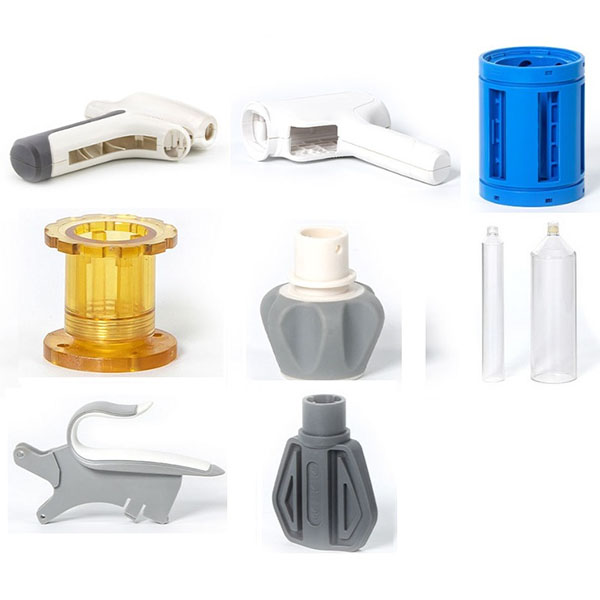
thermoplastic injection-molded parts for medical devices
Thermoplastic injection-molded parts for medical devices offer advantages of dimensional stability, high repeatability, and the ability to realize complex structures and fine tolerances, making them suitable for traceable production from small-to-medium batches to large-scale manufacturing.
Description
Thermoplastic injection-molded parts for medical devices are precision components formed by injection molding of thermoplastic engineering plastics, and they are widely used in medical device housings, structural parts, guide parts, snaps, connectors, disposable consumable accessories, and reusable medical assemblies.
Typical applications:
- Medical device housings and panels: such as enclosures and structural parts for monitors, analyzers, and handheld devices.
- Fluid connectors and valve bodies: interface parts and valve seats used for infusion, drug delivery, and tubing connections.
- Disposable or reusable consumable accessories: such as sampler accessories, reagent racks, and catheter fixation devices (subject to material requirements).
- Internal brackets and positioning parts: plastic slots and support structures used to locate PCBs, sensors, or optical components.
- Non-critical load-bearing parts of surgical instruments: such as handles, sleeves, buttons, and operation mechanisms (material selection must meet sterility and chemical resistance requirements).
Common materials and characteristics of thermoplastic injection-molded parts:
- Medical-grade polypropylene (PP): good chemical stability, chemical resistance, and can be heat-sealed or welded.
- Medical-grade polycarbonate (PC): impact-resistant and highly transparent, suitable for clear windows and structural parts.
- Medical-grade polyamide (PA, nylon): wear-resistant and fatigue-resistant, suitable for load-bearing or sliding-fit parts (note moisture absorption effects on dimensions).
- Medical-grade polyimide-modified materials and POM (polyoxymethylene): used for parts requiring high rigidity and low friction.
- Medical-grade PPSU, PEEK and other high-end engineering plastics: used for reusable devices subjected to high-temperature sterilization or harsh environments.
- When selecting materials, comprehensively consider biocompatibility, sterilization methods (autoclave, ethylene oxide, gamma irradiation, etc.), chemical resistance, and mechanical properties.
Design points and engineering considerations:
- Dimensional tolerances and mating surfaces: define critical dimensions and fit tolerances, and specify fit classes and surface roughness where necessary.
- Thin-wall and flow design: distribute wall thickness reasonably to avoid excessively thin or thick areas that cause warpage, short shots, or burning.
- Stress and rib arrangement: use ribs, chamfers, and fillets to reduce stress concentration and improve rigidity.
- Demolding and ejection design: consider draft angles, ejector pin locations, and ejection sequence to protect precision features and surfaces.
- Post-processing and secondary assembly locations: reserve positions for adding studs, heat-riveting, or ultrasonic welding to facilitate subsequent assembly.
- Cleanability and sterilization process adaptation: for sterilizable parts, consider material resistance to high temperature/irradiation and design geometries that are easy to clean.
- Material shrinkage and warpage compensation: set mold dimensional compensation according to material grade and validate with moldflow analysis.
Injection molding process and production flow:
- Material receipt and drying: strictly dry hygroscopic materials (such as PA) and record batches to ensure dimensional stability.
- Mold preparation and trial molding: perform trial molding, adjust gate, holding, and cooling parameters, and optimize yield and dimensional consistency.
- Injection molding: control injection speed, holding pressure, mold temperature, and cooling time according to process specifications.
- Post-processing and secondary machining: trimming, ultrasonic/heat-plate welding, riveting, assembly, or surface coating (if permitted).
- Cleaning and sterilization (if applicable): perform cleaning, drying, and pre-packaging sterilization according to customer requirements.
- Finished product inspection and release: carry out appearance, functional, sealing, and dimensional inspections, and generate inspection records and batch traceability information.