
 English
  Français
  Tiếng Việt
  Italiano
  Nederlands
  Türkçe
  Svenska
  Polski
  Română
  Latviešu
  한국어
한국어  Русский
  Español
  Deutsch
  Українська
  Português
  العربية
  Indonesian
  Čeština
  Suomi
Suomi  Eesti
Eesti  Български
  Dansk
Dansk  Lietuvių
  Bokmål
  Slovenčina
  Slovenščina
  Ελληνικά
  Magyar
  עברית
עברית 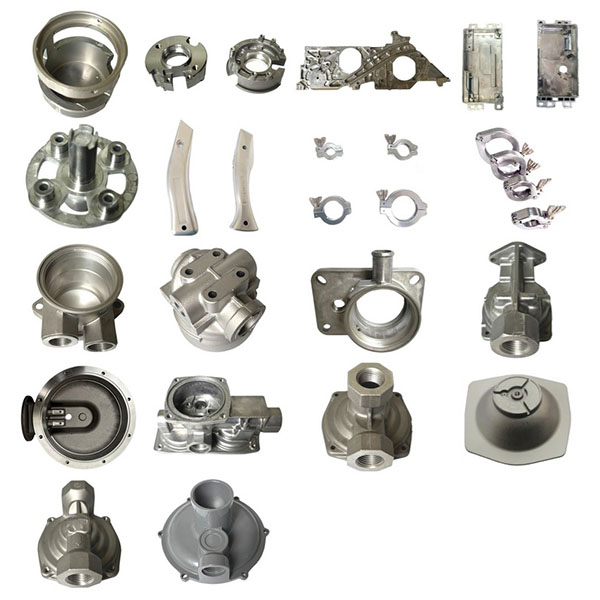
aluminum alloy die-cast parts for rugged applications
Aluminum alloy die-cast parts are suitable for various electronic devices, automotive components, industrial equipment, and consumer products that require metal enclosures, structural parts, or decorative components, providing consistency and cost-effectiveness in high-volume production.
Aluminum alloy die-cast parts are mass-produced using high-pressure die casting, balancing strength, dimensional stability, heat dissipation performance, and surface quality.
Main materials and performance characteristics:
- Aluminum alloy materials: Common grades include die-casting alloys such as ADC12 and A380; higher-strength or higher-thermal-conductivity aluminum alloys can also be selected according to performance requirements.
- Mechanical properties: Provide good strength and rigidity, suitable for bearing structural loads and mechanical connections.
- Thermal properties: Excellent thermal conductivity facilitates heat-dissipation design, suitable for enclosures and heat-dissipation components of thermally sensitive elements.
- Surface quality: Die-cast parts can achieve relatively high surface finish, which is convenient for subsequent anodizing, painting, or sandblasting surface treatments.
- Machinability and assemblability: Secondary machining (drilling, tapping, milling, etc.) can be performed after die casting to meet assembly and fit requirements.
Design recommendations:
- Wall thickness and transitions: Use uniform wall thickness design and provide fillets or chamfers at thickness transitions to reduce stress concentration and casting defects.
- Ribs and supports: Design ribs in areas requiring increased rigidity, controlling rib thickness relative to the main wall thickness to prevent warping or filling difficulties.
- Gates and venting: Optimize gate locations and sizes, and design vent grooves at parting lines and critical positions to reduce trapped air and burn marks.
- Dimensional tolerances and machining allowances: Reserve machining allowances for critical mating surfaces, threaded holes, and sealing faces, and specify tolerance grades on drawings.
- Demolding and ejection: Design appropriate ejection mechanisms or slider structures according to part geometry to ensure safe and reliable part release and ejection.
Typical application areas of aluminum alloy die-cast parts:
- Automotive industry: instrument housings, heat-dissipation components, structural brackets, and functional exterior parts.
- Communications and electronic equipment: enclosures, heat-dissipation structures, interface covers, etc.
- Industrial equipment and control cabinets: motor housings, junction boxes, machine tool components, etc.
- Lighting and outdoor equipment: streetlight housings, LED heat-dissipation modules, and protective enclosures.
- Consumer electronics and home appliances: premium appliance panels, decorative components, and protective housings.
Aluminum alloy die-cast parts are suitable for various electronic devices, automotive components, industrial equipment, and consumer products that require metal enclosures, structural parts, or decorative components, providing consistency and cost-effectiveness in high-volume production.