
 English
  Français
  Tiếng Việt
  Italiano
  Nederlands
  Türkçe
  Svenska
  Polski
  Română
  Latviešu
  한국어
한국어  Русский
  Español
  Deutsch
  Українська
  Português
  العربية
  Indonesian
  Čeština
  Suomi
Suomi  Eesti
Eesti  Български
  Dansk
Dansk  Lietuvių
  Bokmål
  Slovenčina
  Slovenščina
  Ελληνικά
  Magyar
  עברית
עברית 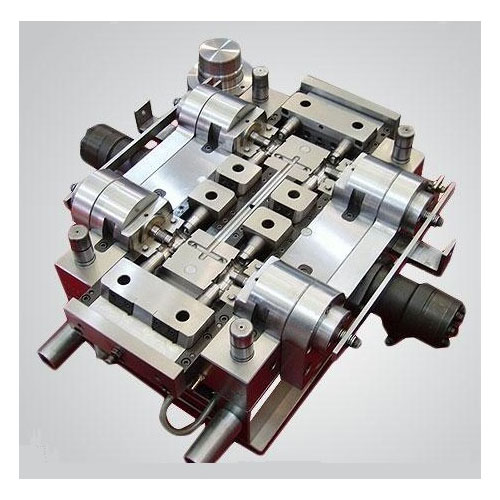
aluminum alloy die cast mold solutions for high volume
High-quality aluminum alloy die-casting molds directly determine the dimensional accuracy, surface quality, and production stability of castings, and are suitable for mass production of automotive parts, electronic heat sinks, industrial housings, home appliances, and various precision aluminum alloy components.
Description
An aluminum alloy die-casting mold is the core tooling used for aluminum alloy die casting production, responsible for functions such as mold filling of molten metal, cooling, forming, and ejection.
Mold materials and surface treatments:
- Mold steels: Common materials include heat- and wear-resistant mold steels such as H13, S136, and 420. The appropriate grade should be selected based on the type of aluminum alloy and production volume, and proper heat treatment applied.
- Surface treatment: Processes such as nitriding, chrome plating, PVD, or other surface hardening treatments are used to improve wear resistance and anti-aluminum-stick properties, extend mold life, and improve surface finish.
- Heat treatment and tempering: Precise heat treatment processes (quenching, tempering, and aging) can increase mold hardness and toughness, reducing the risk of thermal cracking and deformation.
Mold structure and design key points:
- Cavity and core accuracy: Use appropriate tolerance fits and locating structures to ensure mold closure position and cavity consistency, thereby achieving stable dimensional accuracy.
- Cooling system design: Arrange cooling channels (or embedded cooling pipes) appropriately to control mold temperature, shorten solidification cycles, and reduce thermal stress and warpage.
- Gates and runners: Optimize gate types and positions, and design suitable flow distributors and overflow/venting features to ensure smooth melt filling and avoid porosity and cold shuts.
- Ejection and slider mechanisms: Design ejector pins, plates, or sliders according to part geometry to ensure safe and reliable ejection and discharge, reducing casting damage.
- Venting and vent grooves: Design effective venting channels at parting lines and critical locations to reduce trapped air and burn marks.
Mold manufacturing processes:
- Precision machining: Use processes such as CNC milling, wire EDM, slow-feed wire cutting, sinker EDM, and grinding to achieve high-precision cavity and core machining.
- Assembly and debugging: After heat treatment, assemble mold components precisely, perform fit inspections, and conduct trial molding parameter adjustments to ensure accurate closure, ejection, and parting movement.
- Trial molding and correction: Obtain first articles through trial molding, analyze defects, and adjust gate, cooling, and ejection parameters; perform cavity correction if necessary.
Typical application areas of aluminum alloy die-casting molds:
- Automotive industry: high-strength and high-precision aluminum alloy parts such as engine components, transmission parts, and body accessories.
- Electronics and heat-sink components: parts requiring good thermal conductivity and surface quality, such as heat sink housings, fins, and structural brackets.
- Industrial equipment and housings: medium to large-sized aluminum parts such as motor housings, gearbox casings, and instrument enclosures.
- Consumer products: appliance panels, decorative components, and aluminum alloy parts that require high-quality appearance.