
 English
  Français
  Tiếng Việt
  Italiano
  Nederlands
  Türkçe
  Svenska
  Polski
  Română
  Latviešu
  한국어
한국어  Русский
  Español
  Deutsch
  Українська
  Português
  العربية
  Indonesian
  Čeština
  Suomi
Suomi  Eesti
Eesti  Български
  Dansk
Dansk  Lietuvių
  Bokmål
  Slovenčina
  Slovenščina
  Ελληνικά
  Magyar
  עברית
עברית 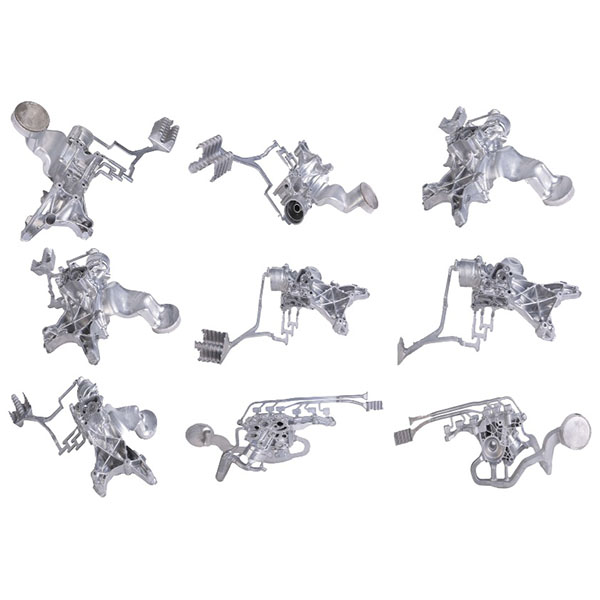
die-cast automotive parts for precision assemblies
Die-cast automotive parts are produced in volume by die casting to manufacture metal structural and decorative components. Common materials include aluminum alloys, zinc alloys, and magnesium alloys.
Description
Die-cast automotive parts offer high forming accuracy, smooth surface finish, dimensional stability, and good mechanical properties, making them suitable for a wide range of automotive applications such as engines, body structures, driveline components, suspension parts, interior and exterior trim, and electronic modules.
Design and engineering recommendations:
- Gate and runner design: Proper arrangement of gates and runners can improve metal flow and reduce the risk of porosity and cold shuts.
- Venting and temperature control: Fully consider vent locations and mold temperature control to improve surface quality and dimensional stability.
- Ribs and fillets: Use appropriate ribs and transitional fillets to increase rigidity and improve filling performance.
- Allowance for post-processing: Reserve machining allowance on critical mating surfaces to ensure assembly fit and sealing.
Production process:
- Mold development: 2D and 3D design, moldflow simulation, mold manufacturing, and heat treatment.
- Die casting forming: Carry out injection, holding, cooling, and open-die cycles according to process parameters to obtain first articles and record process data.
- Gate removal and cleaning: Remove gates and flash, then perform cleaning, degreasing, and any necessary heat treatments.
- Finishing and assembly: Machine mating surfaces by turning or milling, tap threads as needed, and complete pre-assembly and functional testing of assemblies.
- Surface treatment: Apply plating, anodizing, painting, or powder coating as required.
- Inspection and packaging: After passing dimensional, mechanical, and appearance inspections, package and ship according to customer requirements.
Surface treatments and post-processing:
- Plating (chrome, nickel, etc.), anodizing, powder coating, painting, and chemical plating, selected according to environmental and corrosion resistance requirements.
- Surface finishing: Polishing, sandblasting, and texture treatments to meet appearance or anti-slip requirements.
- Secondary machining: Critical mating surfaces may be machined to achieve assembly tolerances and required surface roughness.
Application areas and typical examples of die-cast automotive parts:
- Engine systems: brackets, covers, oil pans, etc.
- Body and chassis: connectors, brackets, decorative trim.
- Drivetrain: housings, wheel hubs, etc.
- Vehicle electronics: sensor housings, heat dissipation assemblies, and connector housings.