
 English
  Français
  Tiếng Việt
  Italiano
  Nederlands
  Türkçe
  Svenska
  Polski
  Română
  Latviešu
  한국어
한국어  Русский
  Español
  Deutsch
  Українська
  Português
  العربية
  Indonesian
  Čeština
  Suomi
Suomi  Eesti
Eesti  Български
  Dansk
Dansk  Lietuvių
  Bokmål
  Slovenčina
  Slovenščina
  Ελληνικά
  Magyar
  עברית
עברית 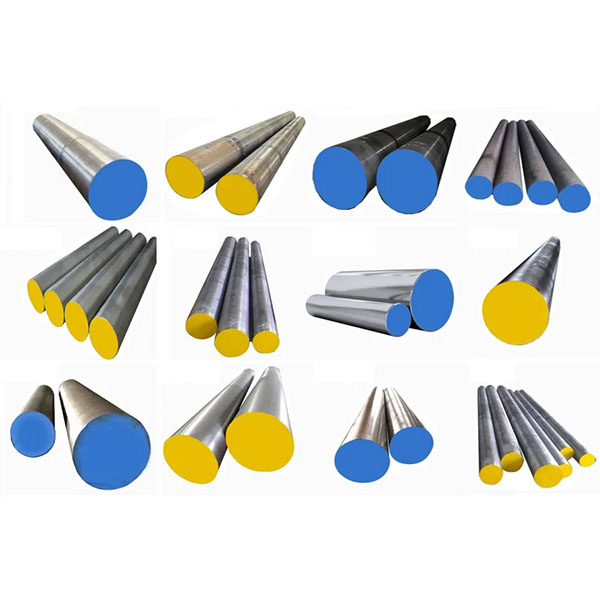
chromium-molybdenum steel forgings for super durability
Chromium-molybdenum steel forgings are made from chromium- and molybdenum-alloyed steels through forging processes and feature excellent strength, toughness and heat resistance.
Due to their excellent overall mechanical properties and high-temperature performance, chromium-molybdenum steel forgings are widely used in the manufacture of critical components that must withstand high loads, impacts, or high-temperature environments, and they can significantly enhance component life and reliability.
Materials and specifications:
- Common grades: common chromium-molybdenum steel grades include but are not limited to 4140, 42CrMo, SCM440, 4150, etc., and selection can be made according to customer requirements.
- Specification support: dimensions, tolerances, heat-treatment depths and surface treatments can be customized according to customer drawings or samples; single-piece samples, small-batch pilot runs and mass production are supported.
- Surfaces and interfaces: key mating surfaces, hole locations, grooves and ribs can be machined as required, and technical specifications for surface hardness and geometric tolerances can be provided.
- Certificates and test reports: material test certificates (MTC), chemical composition and mechanical property reports can be provided; third‑party inspection and certification are supported.
Manufacturing process:
- Forging: open-die or closed-die forging is employed to optimize metal fiber flow, reduce internal defects, and ensure dense microstructure and uniform mechanical properties.
- Heat treatment: normalizing, quenching and tempering, quench-and-temper, or carburizing + quenching processes are applied according to material and service requirements to achieve the required surface hardness and core toughness.
- Precision machining: CNC turning and milling, grinding, gear machining and deep-hole machining are used to finish critical mating surfaces and transmission components, ensuring interchangeability and assembly accuracy.
- Surface strengthening: optional processes such as induction hardening, nitriding, shot peening or carbonitriding can be applied to improve surface wear resistance and fatigue life.
- Surface protection: sandblasting, phosphating, galvanizing, chrome plating, painting or thermal spray coating are available to meet corrosion protection and appearance requirements.
Performance characteristics of chromium-molybdenum steel forgings:
- High strength and high toughness: the Cr‑Mo alloy imparts excellent load-bearing capacity and impact resistance, suitable for severe service conditions.
- Good high-temperature performance: retains satisfactory strength and fatigue properties in medium-to-high temperature environments, suitable for engine and high-temperature components.
- Excellent fatigue life: forging microstructure combined with heat treatment reduces internal defects and significantly improves service life under cyclic loading.
- Surface-to-core performance matching: surface strengthening and heat treatment combinations allow a hard, wear-resistant surface layer while maintaining core toughness.
- Machining and assembly friendly: after precision machining, parts exhibit good dimensional stability and interchangeability, facilitating maintenance and replacement.
Applications:
Chromium-molybdenum steel forgings are widely used for critical load-bearing and high-temperature components in the automotive, aerospace, petrochemical, mechanical transmission, construction machinery and energy equipment sectors, such as crankshafts, connecting rods, gears, journals, flanges, valve bodies and high-stress fasteners.