
 English
  Français
  Tiếng Việt
  Italiano
  Nederlands
  Türkçe
  Svenska
  Polski
  Română
  Latviešu
  한국어
한국어  Русский
  Español
  Deutsch
  Українська
  Português
  العربية
  Indonesian
  Čeština
  Suomi
Suomi  Eesti
Eesti  Български
  Dansk
Dansk  Lietuvių
  Bokmål
  Slovenčina
  Slovenščina
  Ελληνικά
  Magyar
  עברית
עברית 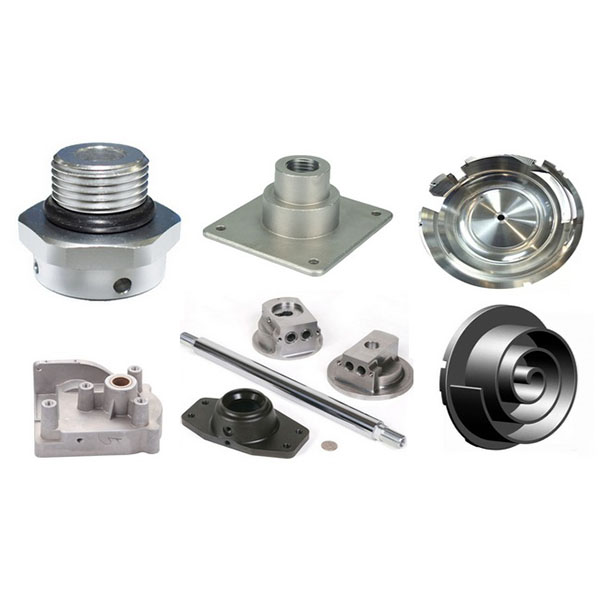
precision CNC machining of new energy vehicle parts
We specialize in high‑precision CNC machining of critical new energy vehicle components. Through material selection, fixture and process optimization and strict quality control, we provide customers with high‑reliability, high‑consistency manufacturing solutions to meet the stringent requirements of electric drivetrains, energy storage and vehicle structural parts.
New energy vehicle parts include critical components such as battery pack structural members, electric motor housings, reducer parts, electronic control housings, thermal management components and chassis structural parts. We provide CNC machining services for parts with requirements for lightweighting, high strength and high precision, aiming to meet the technical demands of mass production and high‑reliability application scenarios.
CNC machining capabilities and equipment for new energy vehicle parts:
- Main equipment: five‑axis machining centers, vertical/horizontal machining centers, turn‑mill composite centers, precision CNC lathes, large gantry machining centers, and automated loading/unloading and bar‑feed systems.
- Machining capabilities: complex 3D contour and internal cavity machining, through‑ and blind‑hole deep drilling, stable thin‑wall machining, precision mating surfaces and guide slot machining, complex thread and spline machining, milling, boring, tapping and mirror finishing; supports completing multiple critical features in a single setup to improve assembly consistency.
- Automation and online inspection: supports automated loading/unloading, online measurement feedback, tool life management and batch data traceability to enhance batch consistency and changeover efficiency.
Material support and blank forms:
- Common materials: aluminum alloys (e.g., 6061, 7075), high‑strength steels and alloys (e.g., 4140, HSLA), stainless steels (e.g., 304, 316, 17‑4PH), copper alloys, titanium alloys and engineering plastics (e.g., PEEK, PA).
- Blank forms: plate, bar stock, extruded or drawn blanks, forgings, castings, milled blanks and customer‑supplied blanks (blank). We can recommend blank schemes based on part geometry, assembly relationships and machining allowance to reduce cutting volume and control costs.
Tools, fixturing and key process points:
- Tools and fixturing: use coated carbide tooling, high‑rigidity tool holders and specialized anti‑vibration and locating fixtures; fixture design balances clamping repeatability, heat‑dissipation pathways and deformation control strategies.
- Key processes: prioritize completing datum positioning and critical mating surface machining in one setup; use five‑axis or turn‑mill composite technology to reduce repeated clamping errors; adopt segmented finishing and clamping‑compensation strategies to control dimensional tolerances and surface quality.
- Thermal and deformation management: control cutting heat by optimizing cutting parameters, feed strategies and toolpaths during finishing stages; apply annealing or stress‑relief treatments when necessary to reduce residual stress and deformation.
Surface treatments and functional processes:
- Surface requirements: ensure low roughness and geometric tolerance control on base materials that contact gaskets, seals or thermal interfaces; chamfering and deburring to guarantee safe assembly.
- Surface treatments: provide anodizing (colored or hard), sandblasting, polishing, plating, electroless plating, painting and powder coating; recommend combined surface solutions based on corrosion resistance, wear resistance and thermal conductivity requirements.
Assembly, testing and performance verification:
- Assembly services: offer modular pre‑assembly (e.g., battery pack brackets, cooling modules), threaded/riveted/welded fastening and pre‑application of thermal interface materials, supporting ready‑to‑install delivery.
- Performance testing: perform dimensional inspection, thermal resistance and thermal‑cycle testing, air‑tightness and sealing tests, fatigue and vibration testing, impact and drop testing, and torque/ torsion verification, providing comprehensive test reports and data records per customer requirements.